Golf Cart Steering Wheel Hard to Turn: Complete Troubleshooting Guide
When your golf cart steering feels heavy or the steering wheel is hard to turn, you’re dealing with one of the most common steering complaints—and the good news is it’s usually fixable at home. Golf cart stiff steering typically stems from low tire pressure (the #1 culprit), worn tie rod ends, damaged bushings, misalignment, or a failing steering gearbox. Most of these issues can be diagnosed in under 30 minutes and resolved with basic tools and the right parts from our Club Car steering parts or brand-specific sections.
Quick Diagnosis Checklist
Work through these causes in order—they’re ranked from most common to least:
- Low tire pressure (causes 40% of stiff steering cases—check first!)
- Worn or dry tie rod ends (creates binding and heavy feel)
- Damaged steering column bushings (makes turning jerky and difficult)
- Wheel alignment issues (toe-in/toe-out misalignment adds resistance)
- Failing steering gearbox (worn gears or low lubrication)
- Seized king pins (front spindles won’t pivot smoothly)
- Bent or damaged steering linkage (physically blocks smooth movement)
- Front end collision damage (frame or spindle bent out of position)
Is Low Tire Pressure Making Your Steering Feel Heavy?
Symptoms: Steering gradually became harder over weeks or months, feels heavy at low speeds, easier once moving, no clicking or popping sounds, affects turning in both directions equally.
Why it happens: This is the single most common cause of stiff steering. When front tires are underinflated—even by just 5 PSI—the contact patch increases dramatically, creating more rolling resistance. Your steering has to overcome this extra friction with every turn. Golf cart tires naturally lose 1-2 PSI per month through normal permeation.
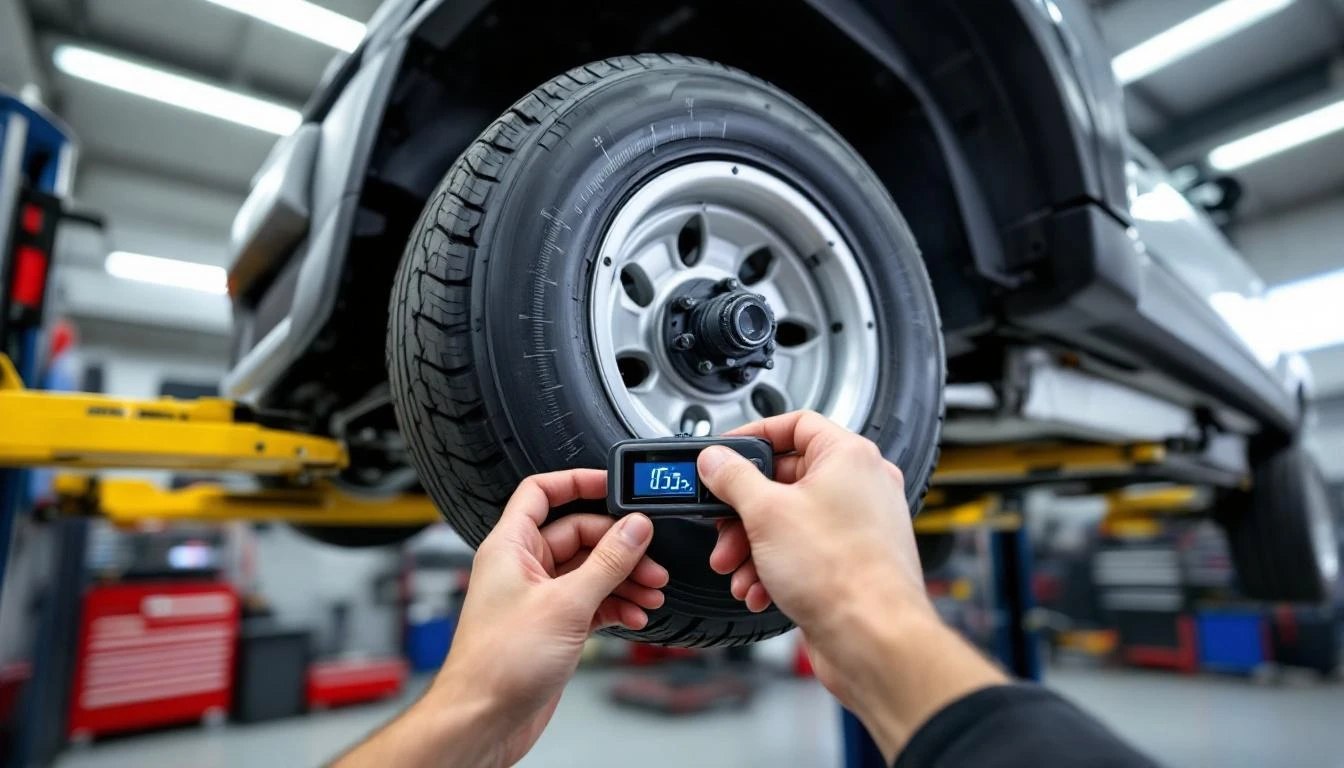
How to test: Use a quality tire pressure gauge to check both front tires when cold (not driven for 2+ hours). Compare to the PSI rating molded into your tire sidewall—most golf cart tires require 18-22 PSI, but verify yours. If you’re more than 3 PSI low, you’ve found your problem.
How to fix:
- Inflate both front tires to the recommended PSI (inflate rears to match for even wear)
- Test drive immediately—steering should feel dramatically lighter
- If tires won’t hold pressure, inspect for punctures or valve stem damage
- Replace worn tires if tread depth is below 2/32″ or sidewalls show cracking
Difficulty: Beginner | Time: 5 minutes | Cost: Free (if you have an air compressor)
Parts you might need: If this revealed tire damage, browse our tire selection for your specific cart model in our Club Car parts or Yamaha golf cart parts sections.
Are Your Tie Rod Ends Worn or Binding?
Symptoms: Hard steering that worsens when turning, occasional popping or clicking sounds when rotating the wheel, uneven tire wear on inside or outside edges, steering wheel doesn’t return to center smoothly after turns, more difficult at standstill than when rolling.
Why it happens: Tie rod ends contain ball-and-socket joints that allow the steering linkage to move through its range while maintaining the connection between your steering gearbox and front wheels. These joints wear from constant movement, corrode from moisture exposure, or dry out when protective boots crack. Once the joint binds or develops excessive play, steering effort increases significantly.
How to test:
- Park on level ground and set the parking brake
- Grab each front tire at 3 o’clock and 9 o’clock positions
- Push and pull forcefully—excessive play (more than 1/4″) indicates wear
- Have a helper turn the steering wheel slowly while you watch the tie rod ends move
- Look for binding, jerky movement, or torn rubber boots
- Check for corrosion, especially if boots are damaged and grease has leaked out
How to fix:
- Jack up the front end and support with jack stands (never work under a cart supported only by a jack)
- Remove the cotter pin and castle nut from the tie rod end
- Use a pickle fork or tie rod separator tool to break the taper connection
- Count the exposed threads on the old tie rod before removal (to maintain alignment)
- Install the new tie rod end with the same thread count showing
- Torque the castle nut to 25-30 ft-lbs and install a new cotter pin
- Repeat for the other side—always replace tie rod ends in pairs
- Have alignment checked or adjust toe-in yourself (see alignment section below)
Difficulty: Intermediate | Time: 1-2 hours for both sides | Cost: $40-80 for a pair
Parts you need: Brand-specific tie rod ends ensure proper fit. Find the exact match in our Club Car steering parts section for Club Car models, or navigate to your specific brand’s steering category for EZGO and Yamaha applications. Don’t forget new cotter pins!
Safety warning: Always use jack stands, never just a jack. The cart can shift and cause serious injury.
Could Worn Steering Column Bushings Be the Problem?
Symptoms: Steering feels notchy or jerky rather than smooth, you can feel resistance points as you turn the wheel, clunking sounds from the steering column area when turning, visible looseness or wobble in the steering shaft, steering wheel sits at different heights depending on where you stopped turning.
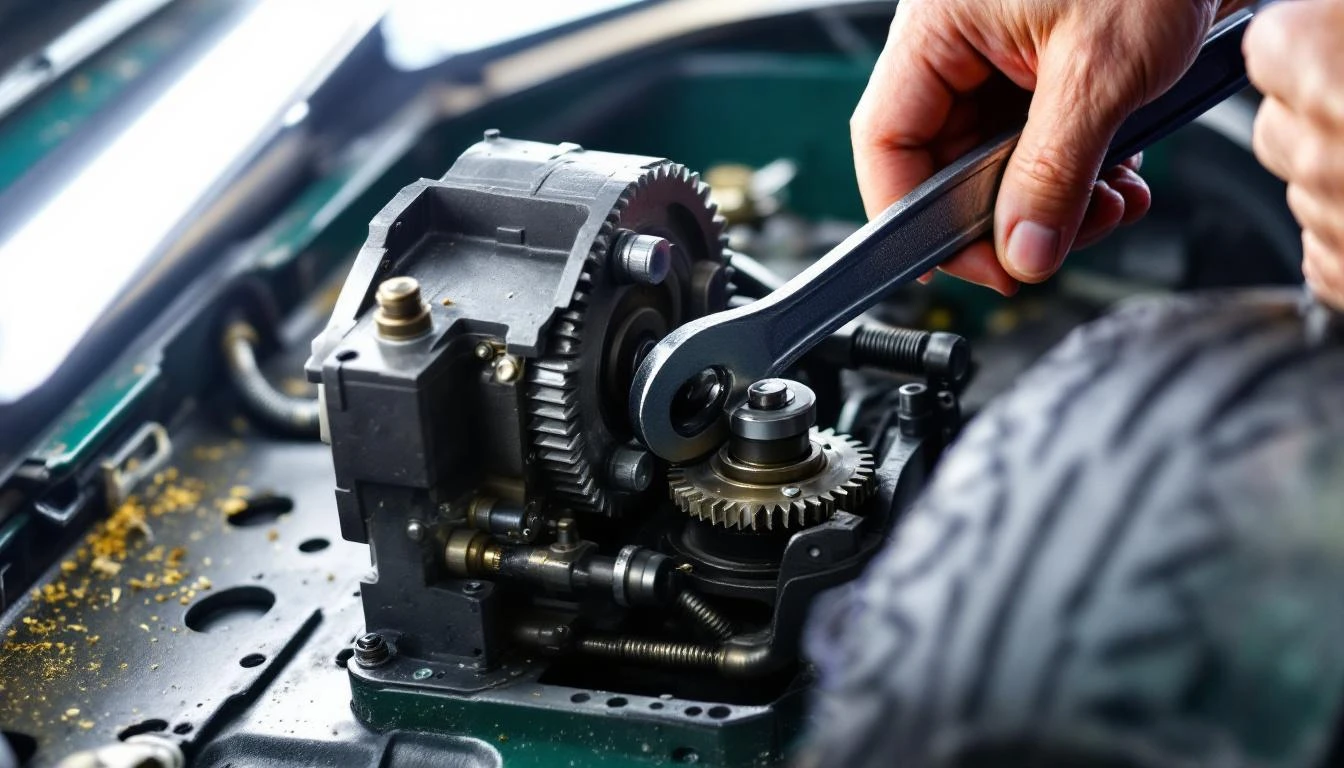
Why it happens: The steering shaft runs through bushings (or in some carts, a bearing) that allow it to rotate smoothly. These bushings wear from constant rotation and can dry out, crack, or develop flat spots. Dirt and debris entering through damaged boots accelerate wear.
Club Car models with rack-and-pinion steering and older EZGO models with steering boxes are particularly susceptible to bushing wear.
How to test:
- With the cart off and parked, grip the steering wheel firmly
- Try to pull the wheel toward you and push it away—excessive in/out movement indicates worn bushings
- Rock the wheel side-to-side and listen for clicking from the column area
- Have someone turn the wheel slowly while you watch the steering shaft where it enters the column
- Look for the shaft wobbling or moving unevenly through rotation
How to fix:
- Disconnect the battery (negative terminal first) to prevent accidental engagement
- Remove the steering wheel using a steering wheel puller (don’t hammer on it—you’ll damage the shaft)
- Remove the steering column cover and access panels
- Disconnect the steering shaft from the gearbox (mark the orientation first)
- Slide the old bushings out and clean the shaft thoroughly
- Apply a thin coat of marine-grade grease to the new bushings
- Press or tap the new bushings into place (they should fit snugly)
- Reassemble in reverse order, ensuring the shaft-to-gearbox connection aligns with your marks
Difficulty: Intermediate to Advanced | Time: 2-3 hours | Cost: $25-60
Parts you need: Steering column bushing kits are model-specific. Check our steering sections for your exact cart brand and year—bushings for a 2015 EZGO RXV won’t fit a Club Car Precedent.
Is Your Golf Cart’s Wheel Alignment Off?
Symptoms: Uneven or rapid tire wear, the cart pulls to one side when driving straight, the steering wheel is off-center when driving straight, or increased steering effort especially when initiating turns from a stop.
Why it happens: Golf cart front wheels need proper toe-in (slight inward angle when viewed from above) to track straight and minimize steering effort. Hitting curbs, potholes, or driving over rough terrain can knock alignment out of spec. Worn tie rod ends, bent spindles, or loose steering components also cause alignment drift.
Even 1/4″ of misalignment creates significant tire scrub and steering resistance.
How to test:
- Park on a level surface and ensure tire pressure is correct (must be equal side-to-side)
- Measure from the front edge of the tire tread to the rear edge at axle height using a tape measure
- Repeat on the opposite side at the exact same height
- Proper toe-in: front measurement should be 1/8″ to 1/4″ less than rear measurement
- If measurements are equal or the front is wider, your alignment is causing extra steering effort
How to fix:
- Loosen the tie rod adjustment sleeve clamp bolts (located mid-way on each tie rod)
- Rotate the adjustment sleeve to lengthen or shorten the tie rod (turn clockwise to increase toe-in)
- Make identical adjustments to both sides to keep the steering wheel centered
- Recheck measurements after each adjustment until within spec (1/8″-1/4″ toe-in)
- Tighten the adjustment sleeve clamps to 15-20 ft-lbs
- Test drive and verify the steering wheel is centered and effort has decreased
Difficulty: Intermediate | Time: 45 minutes | Cost: Free (if components aren’t damaged)
Pro tip: If you can’t achieve proper alignment even with tie rods fully adjusted, you likely have a bent component (spindle, tie rod, or frame damage) that requires replacement.
Could Your Steering Gearbox Be Failing?
Symptoms: Progressive worsening of steering effort over time, grinding or squealing noises when turning the wheel, visible grease leaking from the gearbox, excessive play in the steering wheel (more than 2 inches of movement before wheels respond), difficulty is consistent whether cart is moving or stationary.
Why it happens: The steering gearbox (or rack-and-pinion assembly in newer carts) converts your steering wheel rotation into lateral movement of the tie rods. Internal gears wear from use, seals fail and allow lubricant to leak out, and debris entering through damaged boots accelerates wear.
Without proper lubrication, metal-on-metal contact creates binding and dramatically increases steering effort.
EZGO TXT models and older Club Car DS carts with recirculating ball steering boxes are especially prone to this issue after 8-10 years.
How to test:
- Inspect the gearbox for grease leaks or damage to rubber boots
- With the cart parked, turn the steering wheel and watch the gearbox input shaft
- The shaft should turn smoothly with the wheel—if it’s jerky or requires effort, the box is binding internally
- Check for excessive play by rocking the steering wheel back and forth
- More than 2″ of wheel movement before the wheels respond indicates worn gears
- Listen for grinding, clicking, or popping sounds coming from the gearbox during steering
How to fix:
Minor fixes (adding lubricant): Some steering boxes have a grease fitting. Apply 2-3 pumps of marine-grade grease with a grease gun. If boots are torn, replace them immediately to prevent further contamination.
Complete replacement (recommended for significant wear):
- Disconnect the battery negative terminal
- Mark the alignment of the steering shaft to the gearbox input
- Remove the steering shaft coupling bolt
- Disconnect both tie rods from the gearbox output (pitman arm or rack ends)
- Remove gearbox mounting bolts and extract the assembly
- Install the new gearbox, ensuring proper orientation
- Reconnect tie rods and torque to specification
- Align steering shaft to your marks and secure the coupling
- Reconnect battery and test—steering should feel dramatically lighter
Difficulty: Advanced | Time: 2-4 hours | Cost: $150-350 depending on model
Parts you need: Steering gearboxes are NOT universal—Club Car, EZGO, and Yamaha each use different designs. Verify your exact model year before ordering. Visit our steering parts section and use the year/model filter to ensure compatibility.
Safety warning: Never drive a cart with a failing steering gearbox—loss of steering can occur suddenly.
Are Seized King Pins Causing Steering Resistance?
Symptoms: Steering is extremely stiff when the cart is stationary but improves slightly when moving, one wheel seems to turn more easily than the other, squeaking or creaking sounds from the front wheels when turning, visible rust or corrosion on the front spindle pivot points.
Why it happens: King pins (also called spindle bolts or pivot pins) allow your front wheels to pivot left and right. These pins sit in bushings and require lubrication to rotate smoothly. Water intrusion, lack of maintenance, or damaged grease fittings cause the pins to rust and seize in their bushings.
This is especially common in carts used near saltwater or stored outdoors without covers.
How to test:
- Jack up one front wheel and support with a jack stand
- Have a helper turn the steering wheel to rotate that wheel
- Watch the spindle—it should pivot smoothly without resistance
- If it jerks, sticks, or won’t move at all, the king pin is seized
- Check for grease fittings on the top and bottom of each spindle—they may be clogged or damaged
- Repeat test on the opposite side
How to fix:
Minor seizing (preventive maintenance):
- Locate the grease fittings (usually one on top, one on bottom of each spindle)
- Clean the fittings and inject marine-grade grease until it purges from the top or bottom
- Rotate the wheel back and forth while greasing to work lubricant into the bushing
- Repeat monthly to prevent future seizing
Severe seizing (requires disassembly):
- Jack up the front end and support with jack stands
- Remove the wheel, brake assembly, and spindle
- Drive out the king pins using a brass punch (steel punches can damage threads)
- Clean all rust and corrosion from pins and bushings with a wire brush
- Replace bushings if they’re worn, cracked, or permanently deformed
- Apply anti-seize compound to the king pins before reinstalling
- Pack the king pin cavity with grease before reassembly
- Install new grease fittings if originals are damaged
Difficulty: Advanced | Time: 3-5 hours for both sides | Cost: $30-80 for bushings/pins if needed
Parts you need: King pin bushing kits are available in our steering sections—verify compatibility with your cart’s model and year.
When to Call a Professional
While many steering problems are DIY-friendly, certain situations require professional expertise:
- Frame damage: If you’ve hit a major obstacle and the cart pulls severely to one side, the frame may be bent. This requires specialized alignment equipment and possible frame straightening.
- Persistent problems after DIY repairs: If you’ve replaced tie rod ends, aligned the wheels, and checked tire pressure but steering is still hard, there may be multiple overlapping issues or hidden damage.
- Electric power steering failures: Some newer carts (particularly Yamaha Drive and Club Car Precedent models with EFI) use electric power steering. These systems require diagnostic computers to troubleshoot electronic failures.
- You lack proper tools: Steering work requires jack stands (mandatory for safety), torque wrenches (to prevent under or over-tightening critical fasteners), and specialty tools like tie rod separators. Improper torque on steering components creates dangerous safety hazards.
- Safety-critical fasteners are seized or damaged: Rounded bolt heads, stripped threads, or seized fasteners on steering components shouldn’t be forced—improper removal can create safety issues.
Professional golf cart mechanics have alignment racks, hydraulic lifts, and diagnostic tools that make complex repairs safer and more accurate. Expect to pay $80-150 for professional diagnosis and $200-500 for major steering repairs including labor.
Prevention Tips to Avoid Future Stiff Steering Issues
Consistent maintenance prevents most steering problems before they start:
Monthly Maintenance
- Check tire pressure: Inspect all four tires when cold and adjust to specification. Keep a quality tire gauge in your cart.
- Visual inspection: Look for torn boots on tie rod ends, steering column, and king pins. Replace boots immediately when damaged—they’re cheap insurance.
- Listen for new sounds: Any new clicks, pops, or grinding noises during steering warrant immediate investigation.
Every 6 Months
- Lubricate grease fittings: Apply 2-3 pumps of marine-grade grease to all steering fittings (tie rod ends, king pins, steering column). This single step prevents 70% of steering issues.
- Check for play: Test each front wheel for excessive play using the 3-9 o’clock push-pull method described earlier.
- Inspect tie rod ends: Look for torn boots and feel for roughness when rotating the ball joint.
Annually
- Full alignment check: Measure and adjust toe-in even if steering feels fine—proper alignment extends tire life by 30-50%.
- Steering gearbox inspection: Check for leaks, add grease if equipped with fittings, and verify proper play specifications.
- Complete front end inspection: Have a professional inspect all steering and suspension components if your cart sees heavy use or rough terrain.
Storage Tips
- Cover your cart: UV damage and moisture cause steering boot cracking and component corrosion. A quality cover pays for itself in prevented repairs.
- Keep it dry: Store in a garage or shed if possible, especially in coastal areas where salt air accelerates corrosion.
- Move it monthly: Even in storage, turn the steering wheel lock-to-lock monthly to distribute grease and prevent flat-spotting of bushings.
- Inflate tires properly: Don’t let stored carts sit on underinflated tires—they develop flat spots that affect steering when you start using them again.
The most important prevention strategy? Address small issues immediately. That slight clicking sound or minor increase in steering effort is a warning sign.
Fixing a $30 tie rod end now prevents a $300 steering gearbox replacement later.
Frequently Asked Questions
Why is my golf cart steering wheel hard to turn only when parked?
Steering that’s stiff when stationary but improves when moving typically indicates seized king pins, worn king pin bushings, or low tire pressure. When the cart is stationary, your steering must overcome static friction—all components are locked in place. Once moving, dynamic friction is lower and steering feels easier.
Check tire pressure first (it’s free and takes 5 minutes), then lubricate your king pins through their grease fittings. If that doesn’t help, you likely need new king pin bushings.
Can low battery voltage cause hard steering on electric carts?
No, voltage doesn’t affect manual steering systems found in most golf carts—the steering is purely mechanical. However, if you have one of the newer models with electric power steering (EPS), low voltage can cause the power assist to fail or operate erratically.
Yamaha Drive models with EPS and some high-end Club Car Precedents use electric motors to assist steering. If your cart has EPS and steering suddenly became difficult, check your battery voltage first—it should read 36V or 48V depending on your system (measure with cart off). Voltage below 34V on a 36V system or 46V on a 48V system can cause EPS failure.
Will alignment fix my golf cart’s stiff steering problem?
Alignment alone will fix stiff steering if misalignment is the only issue—specifically when toe-out (front of tires pointing away from each other) creates tire scrub resistance. But if you have worn tie rod ends, seized king pins, or low tire pressure, alignment won’t help until you address those issues first.
Think of it this way: alignment optimizes an otherwise healthy steering system. Fix mechanical problems first, then align. The good news is proper alignment prevents future steering issues and dramatically extends tire life, so it’s always worth doing after steering repairs.
How often should I grease my golf cart steering components?
Grease all steering fittings (tie rod ends, king pins, steering column if equipped) every 6 months for normal use, or every 3 months for heavy use or beach/coastal environments. Each fitting needs 2-3 pumps with a grease gun until you see fresh grease purging. Use marine-grade grease—it resists water washout better than standard automotive grease.
If you’ve never greased your cart’s steering components and it’s more than a year old, do it immediately. Many steering problems stem from simple lack of lubrication. After greasing, turn the steering wheel lock-to-lock several times to work the grease into all contact surfaces.
What’s the difference between rack-and-pinion and gearbox steering?
Club Car Precedent and newer models use rack-and-pinion steering—your steering wheel turns a pinion gear that moves a horizontal rack, directly pushing and pulling the tie rods. It’s more precise and responsive.
Older Club Car DS, most EZGO TXT/RXV, and many Yamaha models use a steering gearbox (recirculating ball type)—your steering wheel turns a worm gear that rotates a pitman arm, which then moves the tie rods.
Both can develop stiff steering from wear or lack of lubrication. Rack-and-pinion tends to develop leaks from boot damage, while gearboxes develop internal gear wear. Parts are NOT interchangeable—always order for your specific steering type.
Can I convert my golf cart to power steering?
Aftermarket electric power steering kits exist for popular models like Club Car Precedent and EZGO RXV, but installation is complex and expensive ($800-1,500 including parts and labor). For most golf cart owners dealing with stiff steering, fixing the underlying mechanical issue is more cost-effective.
Power steering is really only necessary if you have mobility limitations or if your cart is heavily modified with oversized tires that genuinely require power assist. Before considering a power steering conversion, fix your stiff steering problem—you’ll likely find the cart steers easily once tie rod ends, alignment, and tire pressure are correct.
Why does my golf cart pull to one side when I’m driving straight?
A cart that pulls to one side has either alignment issues (toe-in/toe-out or camber misalignment), uneven tire pressure, a bent spindle or tie rod from impact damage, or a dragging brake on one side.
Start simple: check that both front tires have identical pressure. If pressure is equal but pulling persists, check alignment—significant toe-out on one wheel will cause a pull toward that side. If alignment is correct, jack up the cart and spin each wheel by hand. A wheel that stops quickly compared to the other indicates a dragging brake.
Finally, visually inspect for bent components—compare both sides looking for asymmetry in the tie rods, spindles, or control arms.
Is it safe to drive my golf cart with stiff steering?
Driving with stiff steering is potentially dangerous, especially if the stiffness is worsening or accompanied by other symptoms like loose play in the wheel, clicking sounds, or pulling to one side. Stiff steering increases your reaction time in emergencies—you simply can’t turn quickly enough to avoid hazards.
Plus, the underlying cause (like a nearly-failed tie rod end) could break completely while driving, causing total loss of steering control. If your steering is noticeably stiffer than normal, diagnose and repair it before your next drive.
The only exception is if you’ve verified it’s simply low tire pressure and you’re driving at low speed directly to add air—otherwise, park the cart until repaired.