Golf Cart Running Slow: Causes & Solutions for All Brands
If your golf cart has slow acceleration or won’t reach its usual top speed, you’re probably dealing with one of six culprits: weak batteries (by far the most common), worn motor brushes, a failing speed controller, transmission issues, low tire pressure, or brakes that won’t fully release. Electric carts typically lose power due to electrical system problems, while gas models usually suffer from fuel delivery or engine troubles. Most speed issues? You can fix them at home with basic tools and the right parts.
Quick Diagnosis Checklist
Start with the most likely causes and work down:
- Battery voltage and connections – Check charge level and inspect for corrosion (causes 60% of electric cart speed issues)
- Tire pressure – Verify all tires are properly inflated to manufacturer specs
- Brake drag – Spin each wheel to ensure brakes aren’t sticking
- Motor brushes – Test for wear if your cart has over 500 hours of use
- Speed controller – Scan for error codes or burnt smell near controller
- Transmission/clutch – Listen for grinding noises or slipping sensations
- Carburetor/fuel system (gas carts only) – Check for fuel delivery issues
- Governor adjustment (gas carts) – Verify governor hasn’t been improperly restricted
Are Your Batteries Weak or Failing?
Symptoms: Gradual speed loss over several months, reduced range, cart feels sluggish especially on hills, slower acceleration from a stop, dimming headlights.
How to Test
For electric carts, battery health is the first thing to check:
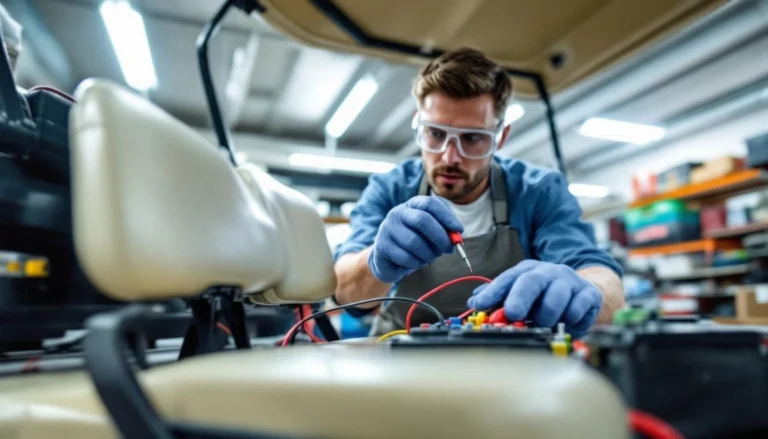
- Use a voltmeter to test each battery individually. A fully charged 6V battery should read 6.3-6.4V, an 8V should read 8.4-8.5V, and a 12V should read 12.6-12.8V
- Test under load: have someone press the accelerator while you measure voltage. If any battery drops below 5V (for 6V batteries) or shows 1+ volt difference from others, it’s failing
- Check for bulging cases, corrosion on terminals, or sulfur smell
- Inspect water levels in flooded lead-acid batteries – low water causes permanent damage
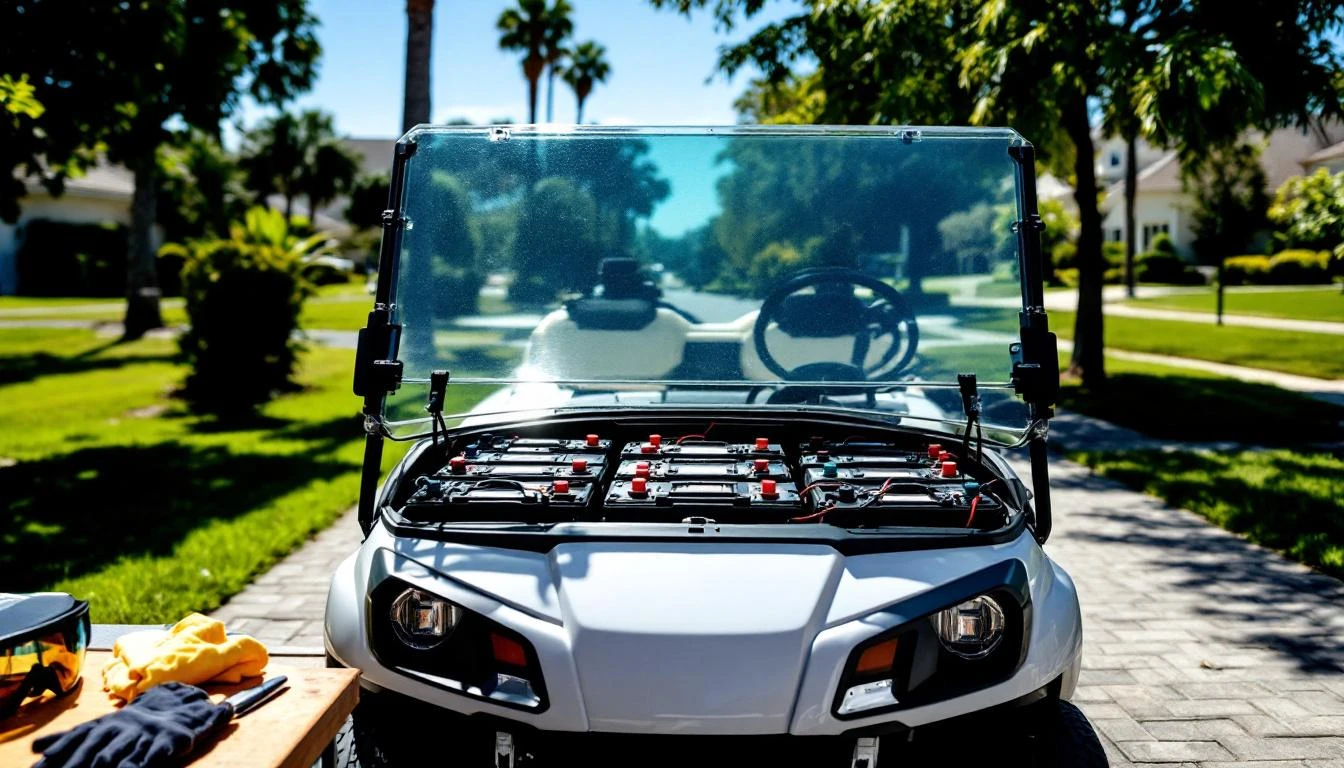
Club Car specific: 48V systems use eight 6V batteries. One weak battery drags down the entire pack.
EZGO specific: Most TXT and RXV models use six 8V batteries. EZGO’s battery management systems are particularly sensitive to voltage imbalances.
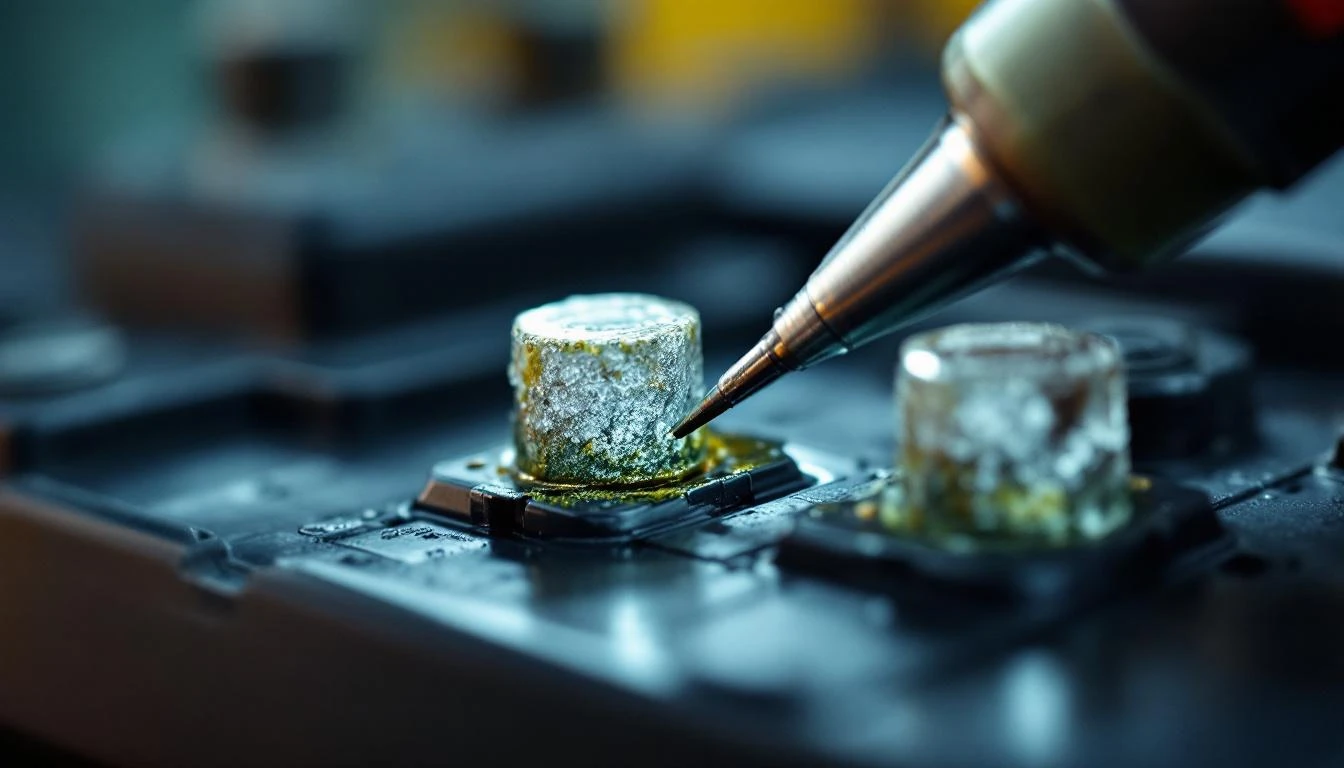
Yamaha specific: Yamaha electric models typically use six 8V batteries. Check the battery indicator on your dash—flashing lights mean charging issues.
How to Fix
Replace batteries as a complete set. Never individually.
Mixing old and new batteries causes the new ones to fail prematurely. Clean all cable connections with a wire brush and apply dielectric grease.
Product solution: Browse our complete selection of golf cart batteries compatible with all major brands. We carry Trojan, Crown, and Interstate batteries with free shipping on complete sets.
Difficulty: Moderate | Time: 2-3 hours | Cost: $600-$1,200 for battery set
Safety warning: Always disconnect the negative cable first when working with batteries. Wear eye protection and gloves. Batteries contain sulfuric acid and produce explosive hydrogen gas when charging.
Could Worn Motor Brushes Be the Problem?
Symptoms: Loss of power over time, sparking visible through motor vents, burning smell from motor area, jerky acceleration, reduced top speed by 5-10 mph.
How to Test
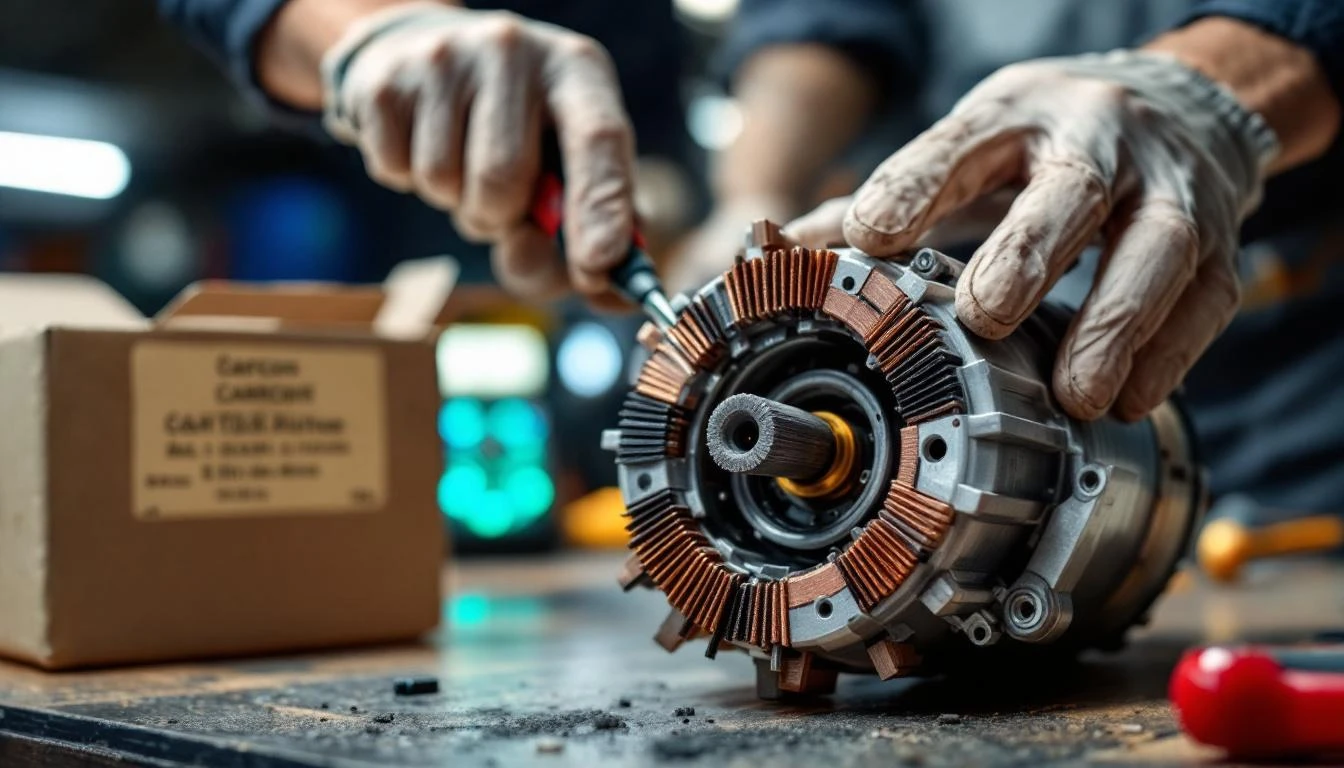
Motor brushes are consumable parts that wear down from friction:
- Remove the brush caps on your motor (usually two, sometimes four)
- Pull out brushes and measure length – they should be at least 1/2 inch long
- Check for chipping, uneven wear, or glazing on the brush surface
- Inspect the commutator (the copper surface the brushes contact) for grooves or black deposits
Brushes typically last 1,000-2,000 hours but wear faster with frequent hill climbing or heavy loads.
How to Fix
Replace brushes in complete sets, even if only one appears worn. Clean the commutator with 600-grit sandpaper wrapped around a dowel while slowly rotating the motor shaft by hand. Never use emery cloth—it’s conductive.
Product solution: Find the correct motor brushes for your model in our motor parts section. We stock OEM and high-performance aftermarket brushes.
Difficulty: Easy to Moderate | Time: 30-60 minutes | Cost: $15-$40
Is Your Speed Controller Failing?
Symptoms: Sudden loss of power, intermittent speed cutting in and out, no response to accelerator pedal, error codes on dash, burnt electrical smell, controller feels hot to touch.
How to Test
The speed controller (also called a motor controller) regulates power flow from batteries to motor:
- Check for error codes – most modern controllers have LED diagnostics (consult your manual for blink codes)
- Inspect the controller for burn marks, melted components, or corrosion
- Test input voltage at controller – should match total battery pack voltage
- Check all controller connections for tightness and corrosion
- Listen for clicking or buzzing from controller when accelerating
Club Car specific: IQ and Excel controllers are common failure points on 2000+ models. The controller is located under the seat near the motor.
EZGO specific: PDS (Precision Drive System) and DCS (Delta-Q ChargeLink System) controllers require brand-specific replacements. Located under passenger-side seat area.
Yamaha specific: Yamaha AC induction motor systems rarely have controller failures, but DC models can experience issues after 10+ years.
How to Fix
Controller replacement requires disconnecting battery cables, removing mounting bolts, unplugging the wiring harness, and reversing the process with the new unit. Always upgrade to the exact replacement model or a compatible upgraded controller.
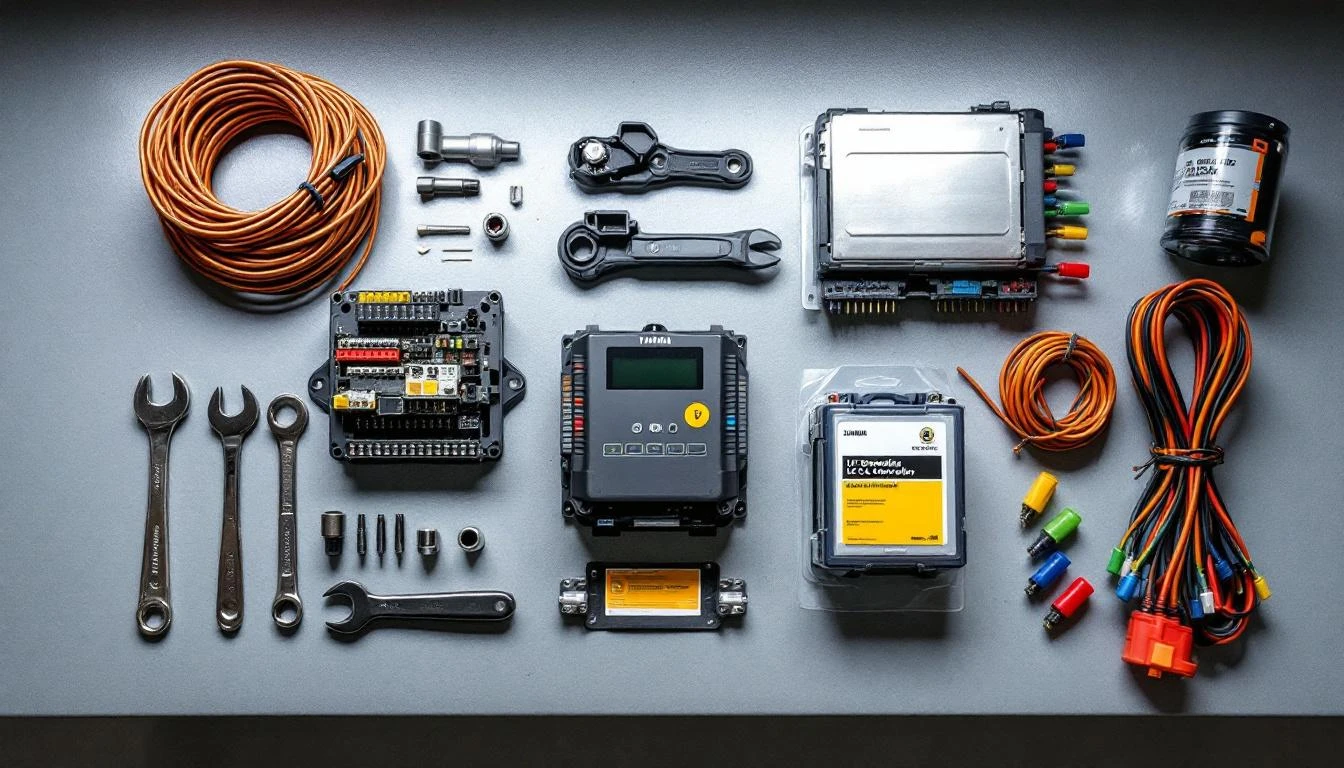
Product solution: Shop our speed controller selection with application-specific fitment guides. We offer OEM replacements and high-performance upgrades with upgraded MOSFET technology.
Difficulty: Moderate | Time: 1-2 hours | Cost: $200-$600
Safety warning: Controllers store electrical charge even after batteries are disconnected. Wait 5 minutes after disconnecting power before touching controller terminals.
Could It Be a Transmission or Clutch Issue?
Symptoms: Slipping sensation during acceleration, grinding or whining noises, difficulty climbing hills, smell of burning clutch material (gas carts), jerky power delivery.
How to Test
For electric carts:
- Jack up the rear wheels and run the cart – listen for gear noise from the transmission
- Check for excessive play in the drive axle
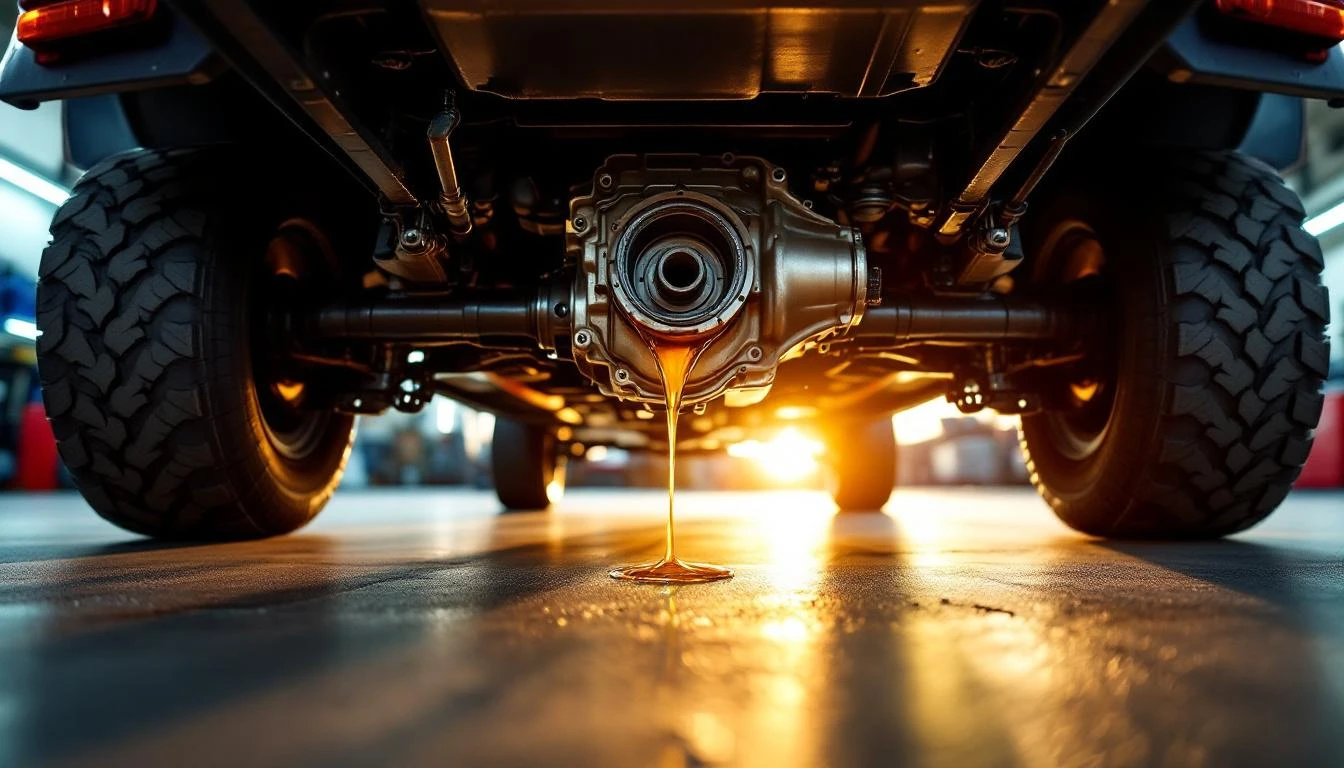
- Inspect gear oil level (if applicable) – low oil causes rapid wear
For gas carts:
- Test the clutch by accelerating from a stop – it should engage smoothly at 1,100-1,500 RPM
- Check drive belt condition – cracks, glazing, or fraying indicate replacement needed
- Inspect clutch springs and shoes for wear
How to Fix
Electric cart transmission issues often require professional diagnosis, but you can change gear oil yourself.
Gas cart clutches are more DIY-friendly—replace worn drive belts, clutch springs, or the entire clutch assembly as needed.
Product solution: Browse Club Car transmission parts and clutch components. We stock complete clutch kits, belts, and rebuild parts for all major brands.
Difficulty: Moderate to Difficult | Time: 2-4 hours | Cost: $75-$400
Are Your Tires Causing Drag?
Symptoms: Cart feels heavy and sluggish, reduced range, uneven wear patterns, visible low tire pressure.
How to Test
This simple fix gets overlooked all the time:
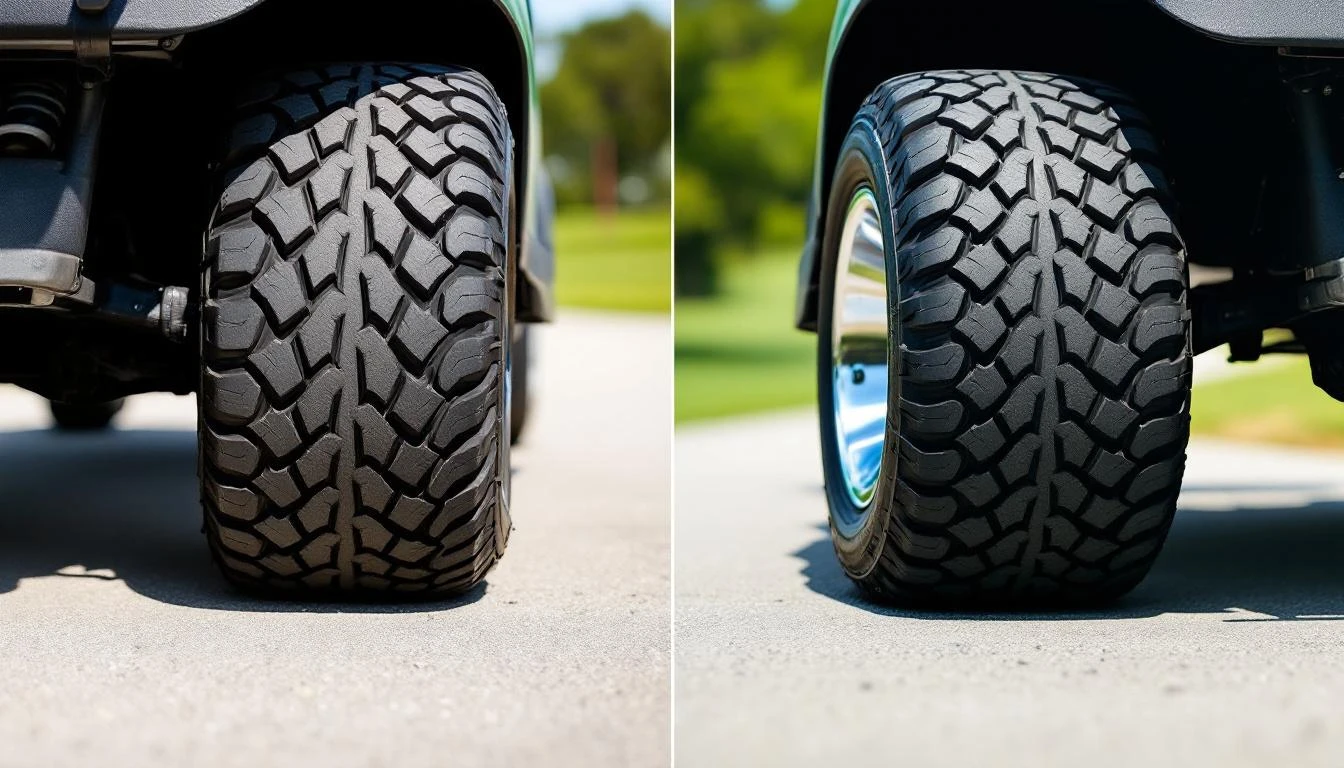
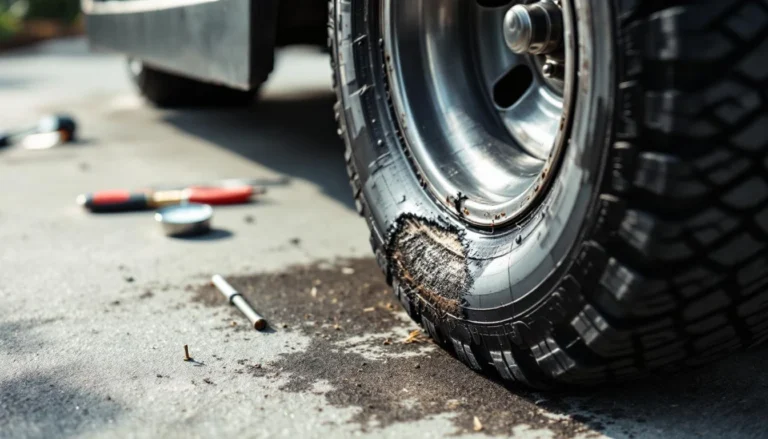
- Check tire pressure with a gauge – standard golf cart tires should be 15-25 PSI (check sidewall)
- Low-profile street tires may require 30-35 PSI
- Oversized tires reduce acceleration and top speed by changing gear ratios
- Spin each wheel – they should rotate freely without rubbing or resistance
How to Fix
Inflate tires to proper pressure. If you’ve installed larger tires without adjusting gearing, consider either downsizing or installing a high-speed gear set to compensate. Oversized tires can reduce speed by 15-20%.
Difficulty: Easy | Time: 15 minutes | Cost: Free to $10 (air)
Are Your Brakes Dragging?
Symptoms: Wheels feel warm after driving, smell of hot brakes, reduced coasting distance, pulling to one side, brake pedal doesn’t fully release.
How to Test
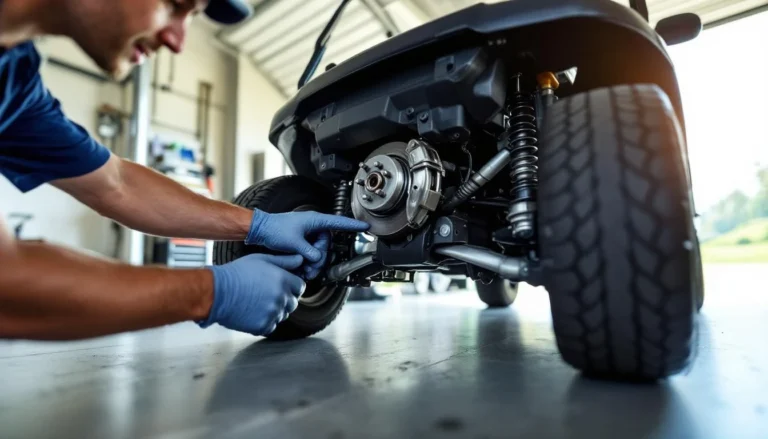
- Jack up the cart and spin each wheel by hand – they should rotate freely
- Check brake cable adjustment – cables that are too tight keep brakes partially engaged
- Inspect brake shoes or pads for proper retraction
- Look for seized brake mechanisms or stuck parking brake cables
How to Fix
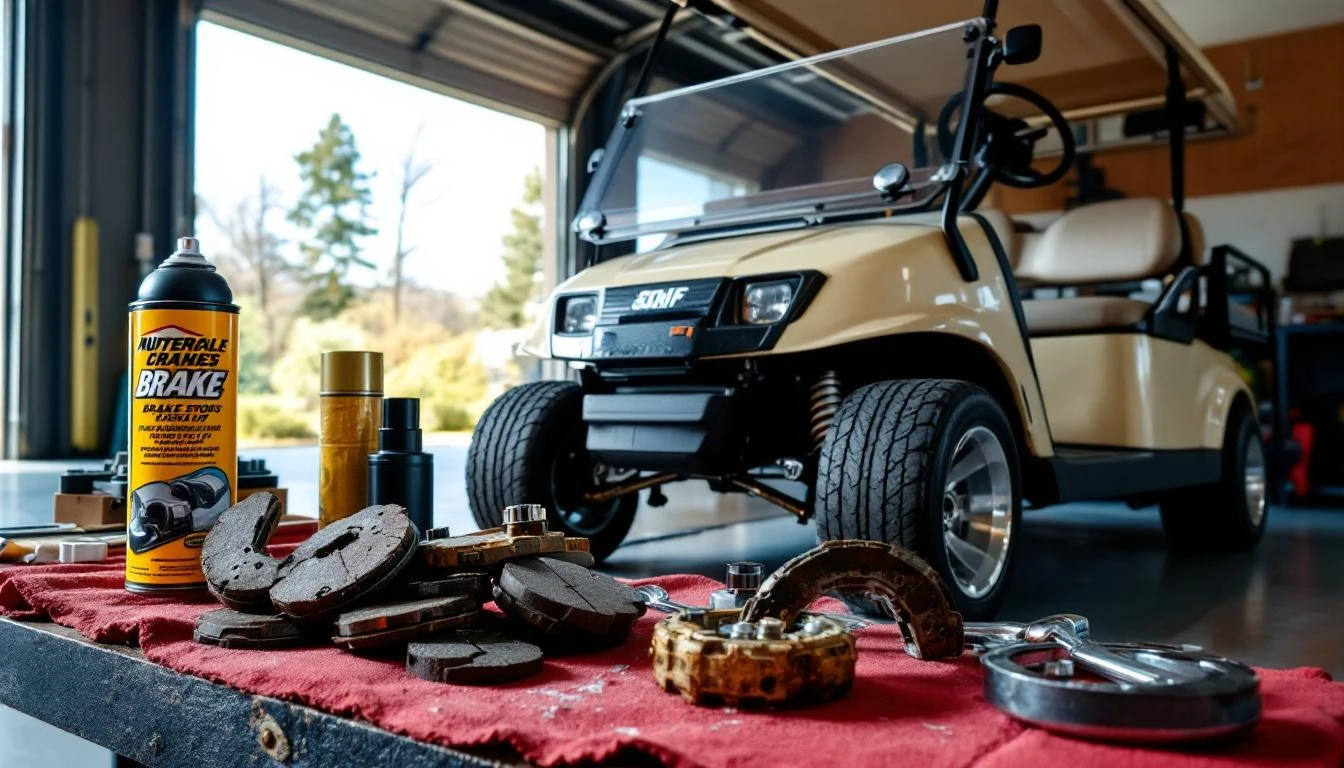
Adjust brake cables to manufacturer specifications. Lubricate brake pivot points with high-temp brake grease.
Replace worn brake shoes or pads, and free up any seized components with penetrating oil.
Difficulty: Easy to Moderate | Time: 1-2 hours | Cost: $20-$100
Gas Cart Specific: Carburetor and Fuel System Issues
Symptoms: Engine runs but lacks power, hesitation during acceleration, black smoke from exhaust, difficulty starting, surging at speed.
How to Test
- Remove air filter and inspect for dirt/oil saturation – restricted airflow kills power
- Check fuel flow from tank to carburetor
- Look for water or debris in fuel filter
- Spray carburetor cleaner into carb while running – if speed improves temporarily, carb needs cleaning
- Inspect spark plug – black/sooty indicates rich mixture, white indicates lean
How to Fix
Clean or rebuild the carburetor, replace fuel filter, install fresh spark plug, and use fresh fuel with stabilizer. Ethanol fuel degrades quickly and clogs jets.
Difficulty: Moderate | Time: 2-3 hours | Cost: $30-$150
Gas Cart Specific: Is the Governor Restricting Speed?
Symptoms: Cart reaches a certain speed then won’t go faster, consistent top speed well below specification.
How to Test
The governor prevents engine over-revving. Check if it’s been improperly adjusted or if linkage is binding.
Factory governor settings should allow 12-15 mph on level ground.
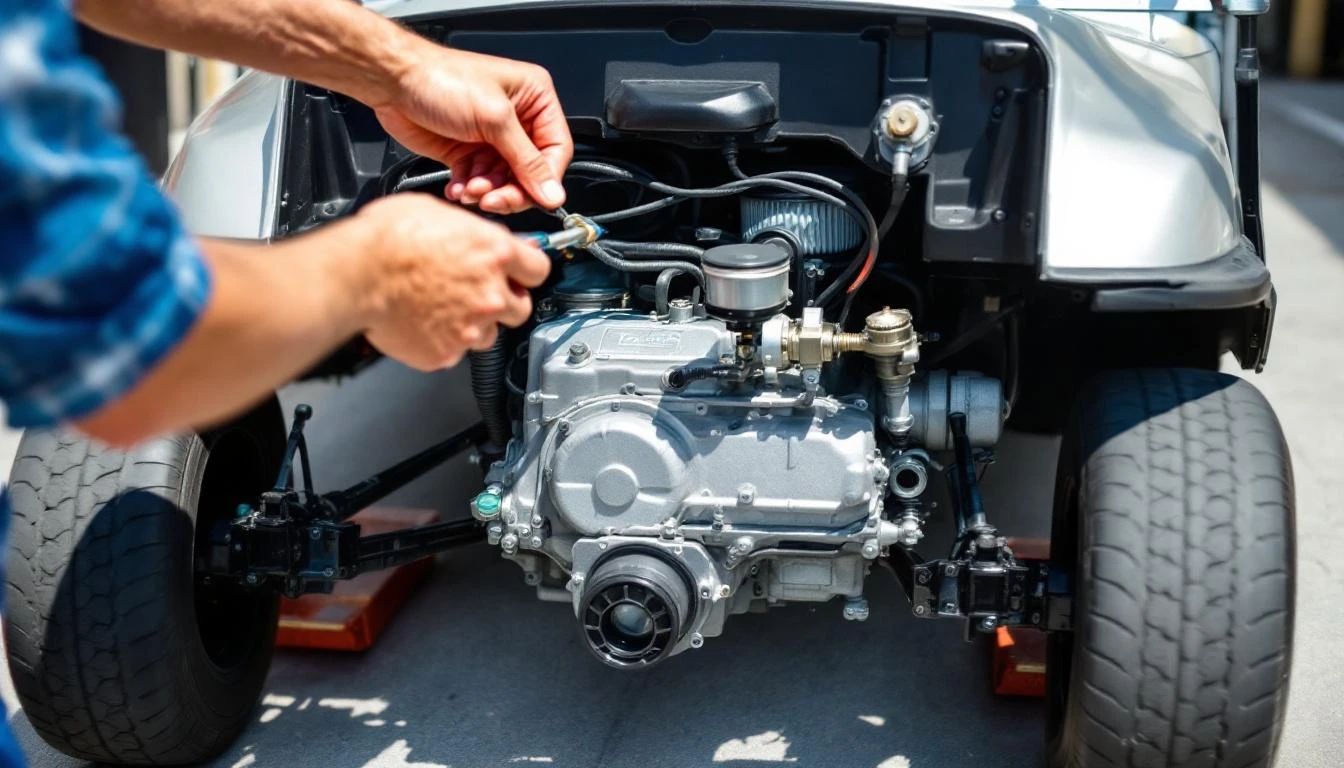
How to Fix
Adjust governor linkage according to manufacturer specifications. Never bypass or disable the governor—it prevents engine damage. If you want more speed legally, consider a performance upgrade kit.
Difficulty: Moderate | Time: 1 hour | Cost: $0-$50
When to Call a Professional
Many speed issues are DIY-friendly, but some situations require professional expertise:
- Motor replacement: If your motor has failed completely, replacement requires specialized tools and knowledge of motor timing and alignment
- Advanced electrical diagnostics: If you’ve checked batteries, controller, and connections but still have issues, a technician with diagnostic software can identify problems
- Transmission rebuilds: Internal transmission damage requires disassembly and specialized parts
- Repeated controller failures: If you’ve replaced the controller and it fails again, there’s likely an underlying electrical problem causing overload
- Gas engine rebuilds: Major engine work like valve adjustments or piston replacement needs mechanical expertise
- Safety-critical repairs: If you’re uncomfortable working with electrical systems or brakes, professional service ensures safe operation
A qualified golf cart technician typically charges $75-$125/hour and can diagnose issues in 30-60 minutes—potentially saving you money on unnecessary parts.
Prevention Tips to Maintain Peak Performance
Keep your cart running at full speed with regular maintenance:
Electric Cart Maintenance
- Monthly: Check battery water levels and add distilled water as needed (flooded batteries only)
- Monthly: Clean battery terminals and apply dielectric grease
- Monthly: Verify tire pressure and inflate to specification
- Every 3 months: Test individual battery voltages and charge state
- Every 6 months: Inspect all electrical connections for tightness and corrosion
- Annually: Check motor brushes and replace if under 1/2 inch
- Annually: Load test batteries or have professional testing done
- Every 2-3 years: Replace entire battery pack to prevent degradation
Gas Cart Maintenance
- Every 25 hours: Check oil level and top off as needed
- Every 50 hours: Replace air filter (more often in dusty conditions)
- Every 100 hours: Change oil and filter
- Every 100 hours: Inspect and clean spark plug, replace if worn
- Every 200 hours: Inspect drive belt and clutch for wear
- Annually: Clean carburetor and fuel system
- Annually: Replace fuel filter
- Seasonally: Use fuel stabilizer if storing for over 30 days
Universal Maintenance
- Keep your cart clean – dirt and debris cause premature wear
- Avoid overloading – excess weight strains all components
- Address small issues immediately before they become major problems
- Store in a dry, covered area when possible
- Use your cart regularly – sitting unused causes battery sulfation and fuel system issues
Frequently Asked Questions
Why is my golf cart slow uphill but fine on flat ground?
This is almost always a battery issue. Weak or failing batteries can provide enough power for level driving but struggle under the increased load of hill climbing. Test each battery individually under load—you’ll likely find one or more with voltage dropping significantly below the others. Cold weather also reduces battery capacity by 20-40%, making hills more difficult.
How much does it cost to fix a slow golf cart?
Simple fixes like tire pressure or brake adjustment cost nothing to $50. Motor brush replacement runs $15-$40 in parts. Battery replacement is the most expensive common fix at $600-$1,200 for a complete set. Speed controller replacement costs $200-$600. Most speed issues can be resolved for under $200 if caught early, but neglected problems can escalate to $1,000+ repairs.
Can I make my golf cart faster instead of just fixing slow speed?
Yes, but first restore it to factory performance by fixing any underlying issues. Once running properly, you can increase speed on electric carts with high-speed controllers, upgraded motors, or gear ratio changes. For gas carts, performance exhaust, carburetor upgrades, and governor adjustments add speed. But check local regulations—many communities restrict golf cart speeds on public roads.
How do I know if my golf cart motor is bad?
Signs of motor failure include: excessive sparking from vents, grinding or squealing noises, burning smell even with new brushes, motor getting extremely hot quickly, no movement even with good batteries and controller, or visible damage to motor housing. Test by checking voltage at motor terminals while accelerating—if voltage is present but motor doesn’t turn, the motor has failed internally.
What’s the difference between slow acceleration and low top speed?
Slow acceleration (taking a long time to reach speed) usually indicates weak batteries, worn motor brushes, or a failing controller. Low top speed (cart won’t exceed a certain MPH) typically points to governor issues (gas carts), incorrect tire size, transmission problems, or severely degraded batteries. Different causes require different fixes, so identify which symptom you’re experiencing.
Will a new speed controller make my cart faster?
Only if your current controller is faulty. A replacement OEM controller restores factory speed. But high-performance aftermarket controllers can increase speed by 5-7 mph by optimizing power delivery and removing factory speed limitations. Always verify your motor and batteries can handle the increased load before upgrading controllers.
Why does my cart start fast then slow down after 5 minutes?
This symptom indicates thermal shutdown or overheating. On electric carts, controllers have thermal protection that reduces power when they overheat—often caused by a failing controller, corroded connections creating resistance, or an overworked motor with worn brushes. On gas carts, this suggests vapor lock in the fuel system or a clogged fuel filter restricting flow as fuel heats up.
Can old batteries cause controller failure?
Absolutely. Weak batteries with high internal resistance force the controller to work harder, generating excessive heat. And when batteries fail, they can create voltage spikes that damage sensitive controller electronics. This is why we always recommend testing and replacing batteries first before diagnosing more expensive components—it often prevents cascading failures.