Club Car Losing Power: Complete Electrical & Battery Diagnostic Guide
When your Club Car loses power or dies while driving, you’re almost always looking at one of four culprits: discharged or failing batteries (70% of cases), corroded connections, a faulty solenoid, or a failing controller. Start with a voltage test on your battery pack—you need 50.4V minimum on a 48V system (8 batteries × 6.3V each) or 38V minimum on a 36V system. If voltage is good but power cuts out intermittently, test your main solenoid by listening for the distinctive “click” when you press the pedal.
Quick Diagnosis Checklist
Work through these causes in order. They’re ranked by frequency and ease of diagnosis:
- Battery pack voltage too low – Dead or weak batteries (70% of power loss issues)
- Corroded or loose battery connections – Prevents current flow even with good batteries
- Failed main solenoid/contactor – Causes sudden complete power loss or intermittent connection
- Faulty motor controller – Creates erratic power delivery or speed reduction
- Bad F&R (Forward/Reverse) switch – Intermittent contact causes power dropout
- Tripped reset button or blown fuse – Safety cutoff activated
- Defective key switch – Intermittent power to entire system
- Weak individual battery in series – One bad battery drags down entire pack
Is Your Battery Pack Voltage Too Low?
Symptoms: Cart starts fine when cool but loses power after 10-15 minutes. Sluggish acceleration. Headlights dim when you press the pedal. Won’t climb hills it used to handle easily. Dies completely after short distances.
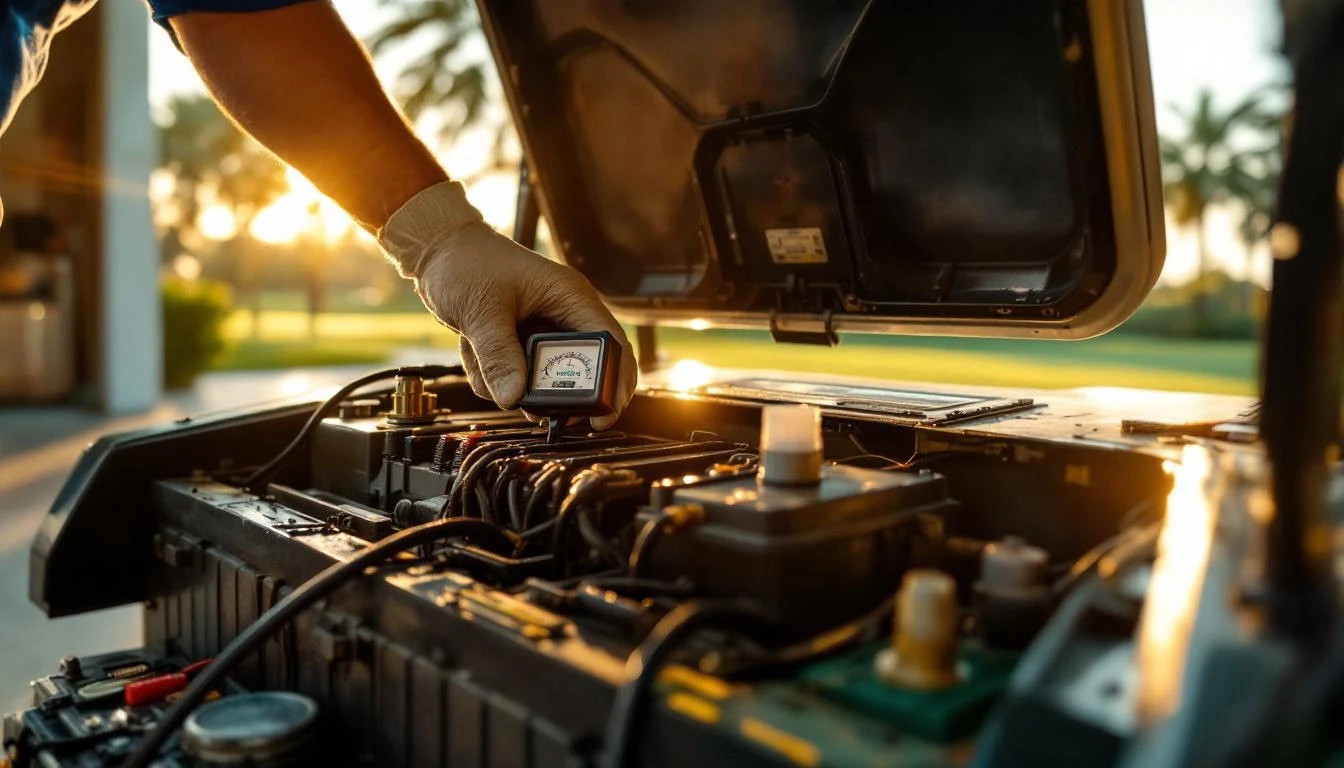
How to Test: You need a multimeter or voltmeter. With the cart off and key removed, measure across the main positive and negative battery terminals (usually at opposite ends of your battery bank).
| System Type | Minimum Resting Voltage | Healthy Full Charge |
|---|---|---|
| 36V (6 batteries) | 38V | 40-42V |
| 48V (8 batteries) | 50.4V | 52-54V |
If you’re below these minimums, your battery pack is discharged or failing.
Next, test each battery individually. You need 6.2-6.4V per battery when fully charged. Any battery reading below 6V is weak and dragging down your entire system.
How to Fix: First, try a full charge cycle (8-12 hours). Retest. If pack voltage comes up but individual batteries still test weak, you need replacement. In series systems like Club Car, replacing just one battery creates imbalance—replace all batteries as a set for best results.
Product Solution: Check our complete golf cart battery packs with fitment guides for your specific Club Car model year. We carry Trojan, Interstate, and US Battery options.
Difficulty: Battery testing is easy (15 minutes). Full pack replacement is moderate difficulty (1-2 hours). You’ll need a 1/2″ socket set and possibly a battery terminal puller.
⚠️ Safety Warning: Batteries produce explosive hydrogen gas during charging. No sparks or flames near batteries. Always disconnect the negative cable first, reconnect it last. Wear eye protection—battery acid causes severe burns.
Are Your Battery Connections Corroded or Loose?
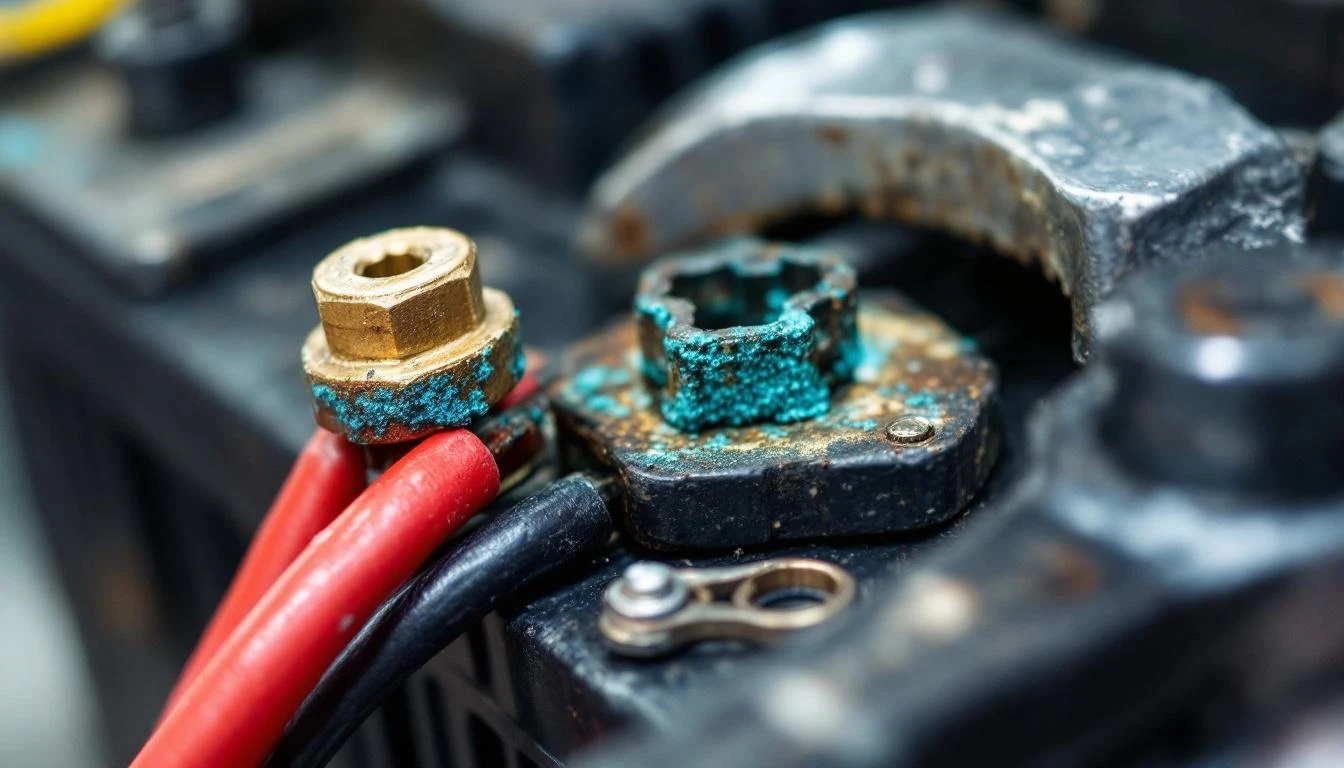
Symptoms: Intermittent power loss that comes back when you wiggle cables. Cart works fine some days, not others. Power drops when hitting bumps. You see white, blue, or green crusty buildup on terminals.
How to Test: Visual inspection first. Lift the seat and examine every battery cable connection. Look for:
- Corrosion (white/green powder or crust) on terminals or cable ends
- Loose connections you can wiggle by hand
- Burned or melted cable insulation near terminals
- Frayed or broken strands in battery cables
Now do a voltage drop test: With the cart on and someone pressing the pedal, measure voltage at the battery terminal, then at the cable end. More than 0.2V difference means bad connection resistance.
How to Fix: For light corrosion, disconnect cables (negative first), clean with a wire brush and baking soda/water solution, rinse, dry completely, and reconnect with dielectric grease.
For heavy corrosion or damaged cables, replacement is safer than cleaning.
Product Solution: Browse our Club Car electrical parts section for battery cables, terminal ends, and connection hardware specific to your model.
Difficulty: Easy (30-45 minutes). Basic hand tools only—wrenches, wire brush, safety glasses.
Prevention Tip: Apply terminal protection spray or dielectric grease after every cleaning. Check connections every 3 months, especially in humid climates or near saltwater.
Is Your Main Solenoid Failing?
Symptoms: Complete sudden power loss—cart just dies instantly. No click sound when you press the pedal. Click sound happens but cart doesn’t move. Works intermittently—sometimes clicks and goes, sometimes just clicks.
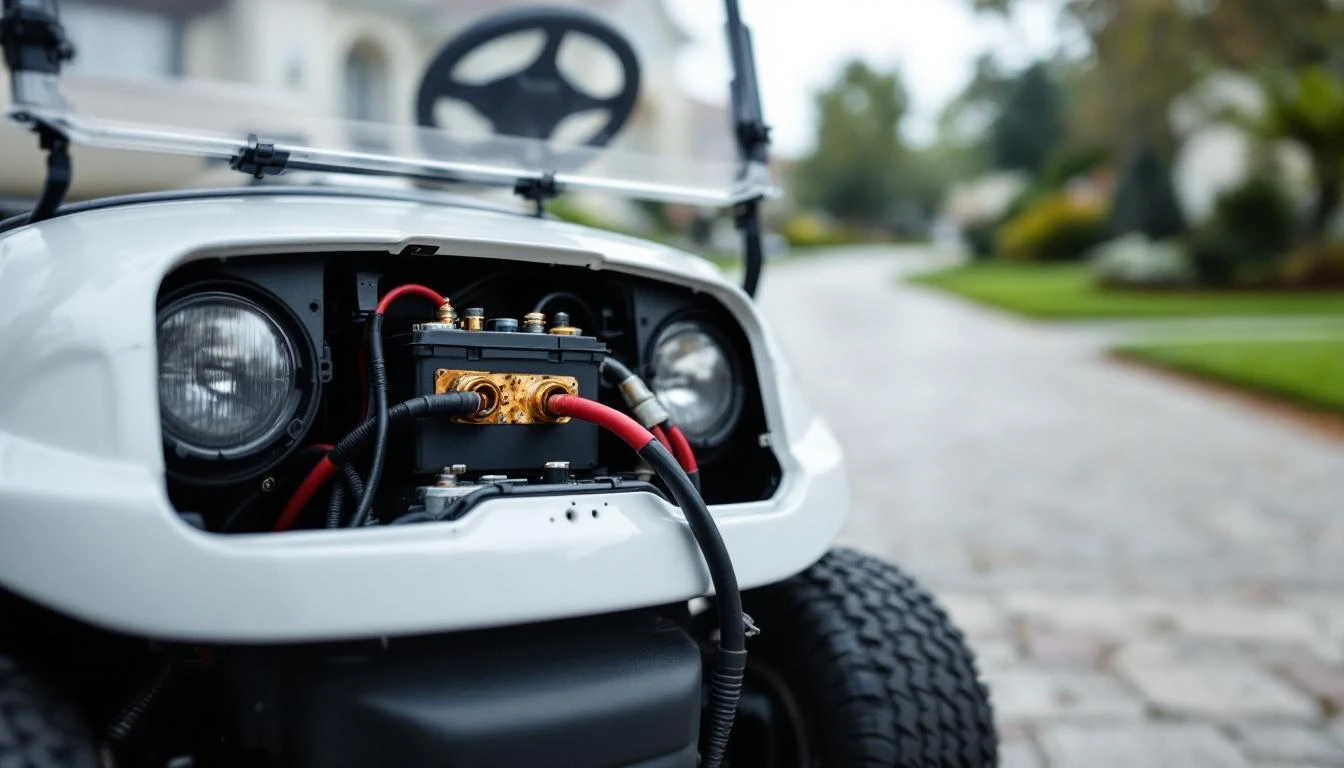
How to Test: The solenoid (also called contactor) is usually a black or silver box near the batteries with thick cables attached. Turn the key to ON and press the accelerator pedal. You should hear a loud CLICK as the solenoid engages.
No click = solenoid isn’t receiving signal (check F&R switch, pedal microswitch, key switch first).
Click but no movement = solenoid contacts are welded or burned inside.
For advanced testing: With a voltmeter, check for 36V or 48V at the small spade terminals when pedal is pressed (this is the activation signal). Check for full pack voltage passing through the large terminals when engaged.
How to Fix: Solenoids can’t be repaired—replace the unit. Club Car uses different solenoids for 36V vs 48V systems, and IQ/Excel systems have specific solenoids. Verify your model before ordering.
Product Solution: Find the correct solenoid in our Club Car electrical parts catalog. Filter by your cart’s model year and voltage system.
Difficulty: Easy to moderate (20-30 minutes). Two wrenches to disconnect cables, mounting bolts. Label cables before disconnecting so you reconnect correctly.
⚠️ Safety Warning: The solenoid carries full battery pack voltage and high amperage. Remove key and disconnect battery negative cable before working on solenoid. Insulated tools only.
Is Your Motor Controller Defective?
Symptoms: Erratic speed—surging or jerky acceleration. Cart runs but won’t reach full speed. Power cuts out under load (hills, passengers). Works in reverse but not forward, or vice versa. You smell burning electronics or see the controller is hot to touch.
How to Test: Controller diagnosis is complex because it’s the “brain” managing power delivery. Start with these checks:
- Look for burned components, melted plastic, or obvious damage on the controller board
- Check that all controller connections are tight (vibration loosens them)
- Test incoming voltage to controller—should match battery pack voltage
- Listen for unusual sounds (buzzing, clicking, humming from controller)
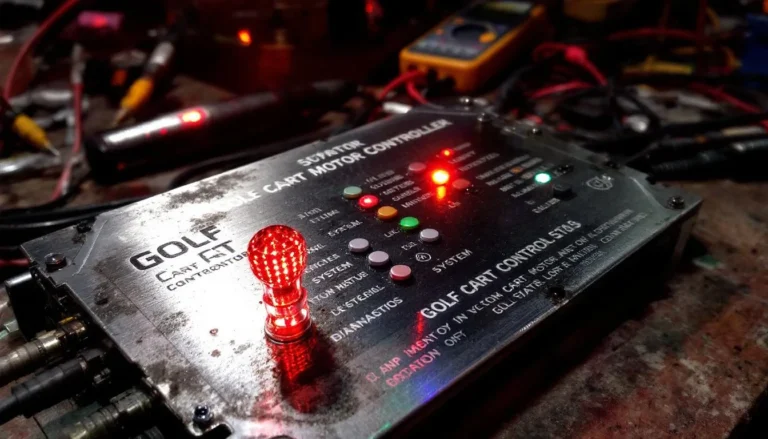
For Club Car IQ systems (1996-2013 model years), check for error codes. The dashboard display shows fault codes that identify specific controller or system problems. Reference your owner’s manual for code meanings.
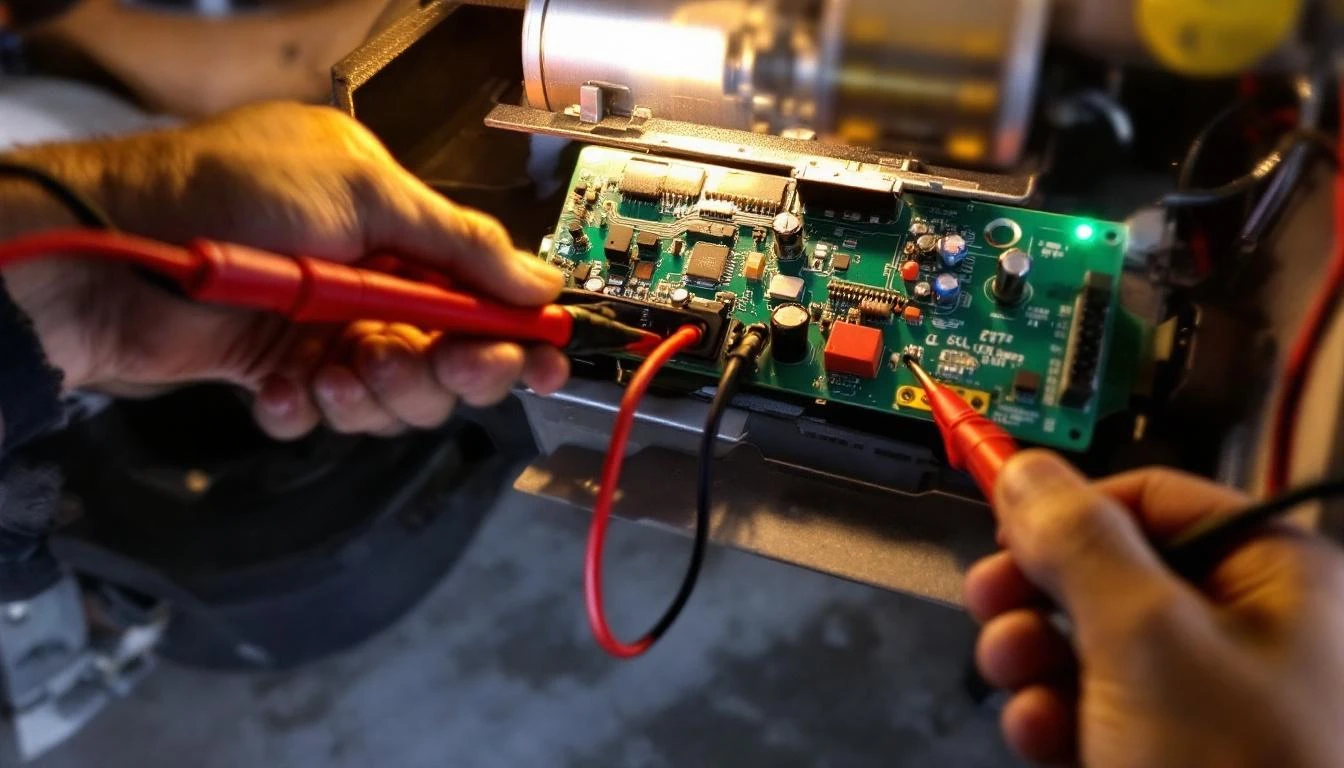
If batteries test good, connections are clean, and solenoid clicks properly but you still have power loss or erratic operation, the controller is the likely culprit.
How to Fix: Controllers are sealed units—no repair, only replacement.
Club Car controllers are model-specific: DS vs Precedent, gas vs electric, 36V vs 48V, year range, and IQ vs non-IQ systems all use different controllers.
Product Solution: Shop our golf cart controllers with detailed fitment charts. Call our tech support at (866) 984-1460 if you need help identifying the correct controller for your specific Club Car.
Difficulty: Moderate to difficult (1-2 hours). Multiple wire connections that must be labeled and photographed before removal. Consider professional installation if you’re not comfortable with electrical systems.
Cost Note: Controllers are expensive ($250-$600 depending on model). Verify it’s actually failed before replacing—test batteries, solenoid, and connections thoroughly first.
Is Your Forward/Reverse Switch Bad?
Symptoms: Works in one direction but not the other. Intermittent—sometimes forward works, sometimes it doesn’t. Have to wiggle the F&R switch to get power. Switching between F/R causes complete power loss.
How to Test: The F&R switch is usually located on the dashboard or near the driver’s seat. With the key on, move the switch from forward to neutral to reverse and back, listening for clicks at each position.
Check for voltage at the switch terminals with a multimeter. In neutral, no voltage should pass. In forward or reverse, you should see battery pack voltage at the appropriate output terminal.
If readings are inconsistent or you get no voltage in positions where you should, the switch contacts are worn or broken.
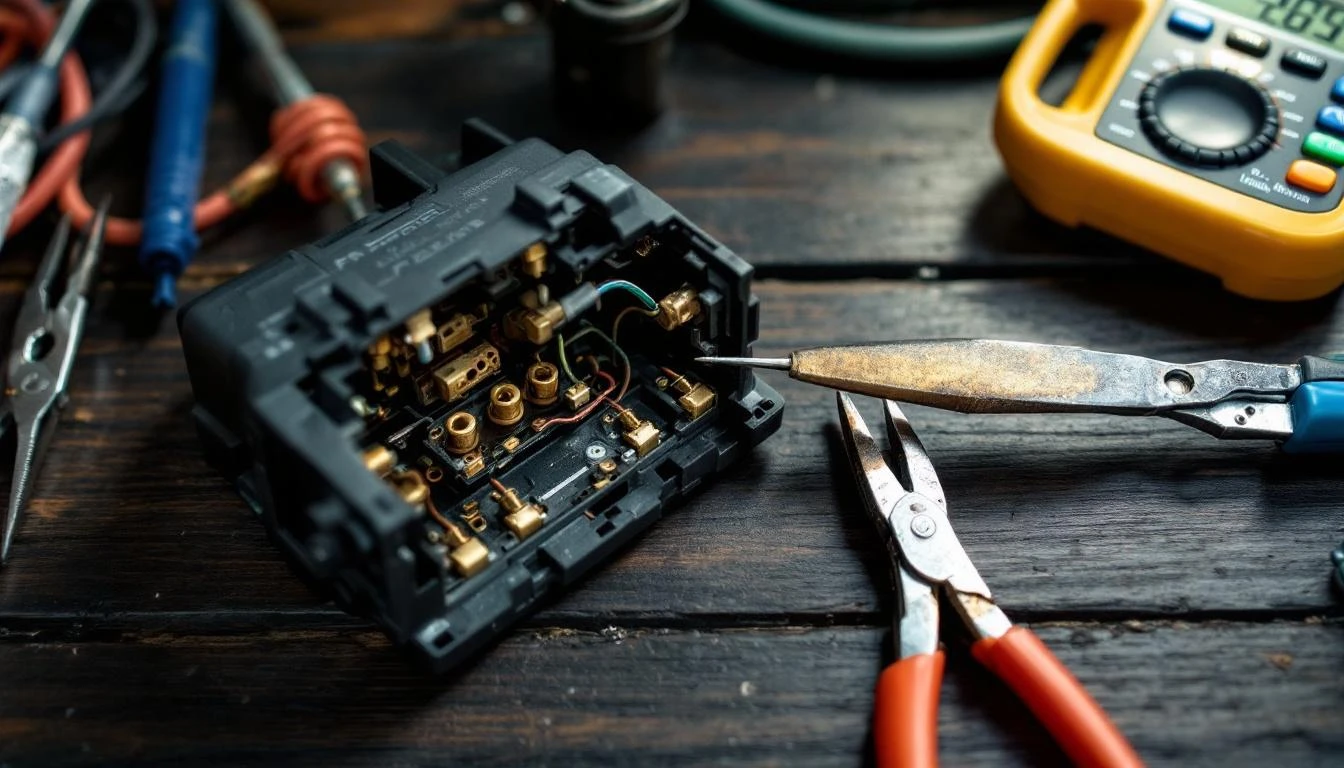
How to Fix: F&R switches can sometimes be cleaned (spray contact cleaner into the switch mechanism), but replacement is more reliable. Club Car uses different switches for different models—verify compatibility.
Product Solution: Find replacement forward/reverse switches in our Club Car electrical parts section.
Difficulty: Easy (15-20 minutes). Usually 2-4 screws and a wiring harness connector. Take a photo before disconnecting wires.
Did You Check the Reset Button and Fuses?
Symptoms: Total power loss—nothing works, no lights, no movement. Happened after driving through water, hitting a big bump, or overloading the cart.
How to Test: Club Car carts have a reset button (usually red or black) located near the motor or controller. This thermal breaker trips when the system overheats or draws too much current. Press the button—if it clicks and stays in, it was tripped.
Check the main fuse (usually a ceramic or blade-type fuse in the electrical system). Some Club Car models have multiple fuses—check your owner’s manual for locations.
How to Fix: If the reset button trips repeatedly, you have an underlying problem causing overcurrent: weak batteries, bad motor, damaged controller, or a short circuit somewhere.
Find and fix the root cause or the breaker will keep tripping.
Blown fuses should be replaced with the exact same amperage—never use a higher-rated fuse. If the new fuse blows immediately, you have a short circuit that needs diagnosis.
Product Solution: Stock up on replacement fuses and circuit breakers from our electrical parts inventory.
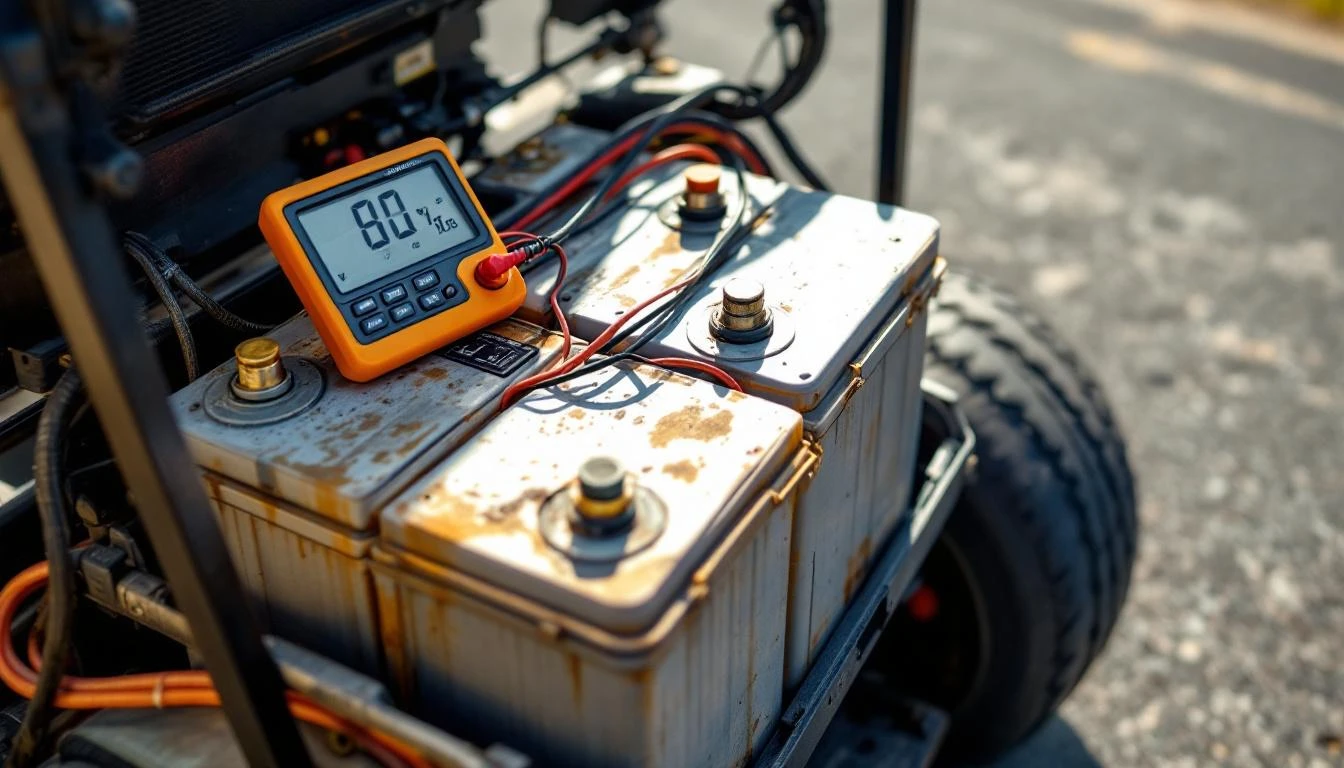
Difficulty: Very easy (5 minutes) to reset button or replace fuse. Difficult to diagnose why it’s tripping—may need professional help.
Is Your Key Switch Defective?
Symptoms: Intermittent power to everything—sometimes cart is completely dead, sometimes it works. Wiggling the key makes power come and go. Key position doesn’t matter—cart acts the same in ON and OFF positions.
How to Test: Turn the key to ON. You should hear the solenoid click or see dashboard lights.
Wiggle the key while it’s in the ON position—if power cuts in and out, the switch contacts are bad.
With a multimeter, test for continuity through the switch in ON position, no continuity in OFF position. If readings are inconsistent, replace the switch.
How to Fix: Key switches are simple replacements—usually just disconnect the wiring harness and unscrew the old switch. Make sure you get a switch with the correct number of terminals for your Club Car model.
Product Solution: Browse key switches in our Club Car electrical parts section, filtered by model compatibility.
Difficulty: Easy (10-15 minutes). Usually 2 screws and a plug connector.
Do You Have One Weak Battery in the Series?
Symptoms: Cart works okay for a while but dies quickly. Range is severely reduced. Some batteries feel hot after use while others stay cool. Cart worked fine until recently despite batteries being old.
How to Test: This is why individual battery testing is critical. In a series system (all Club Car electric carts), batteries are linked positive-to-negative like a chain.
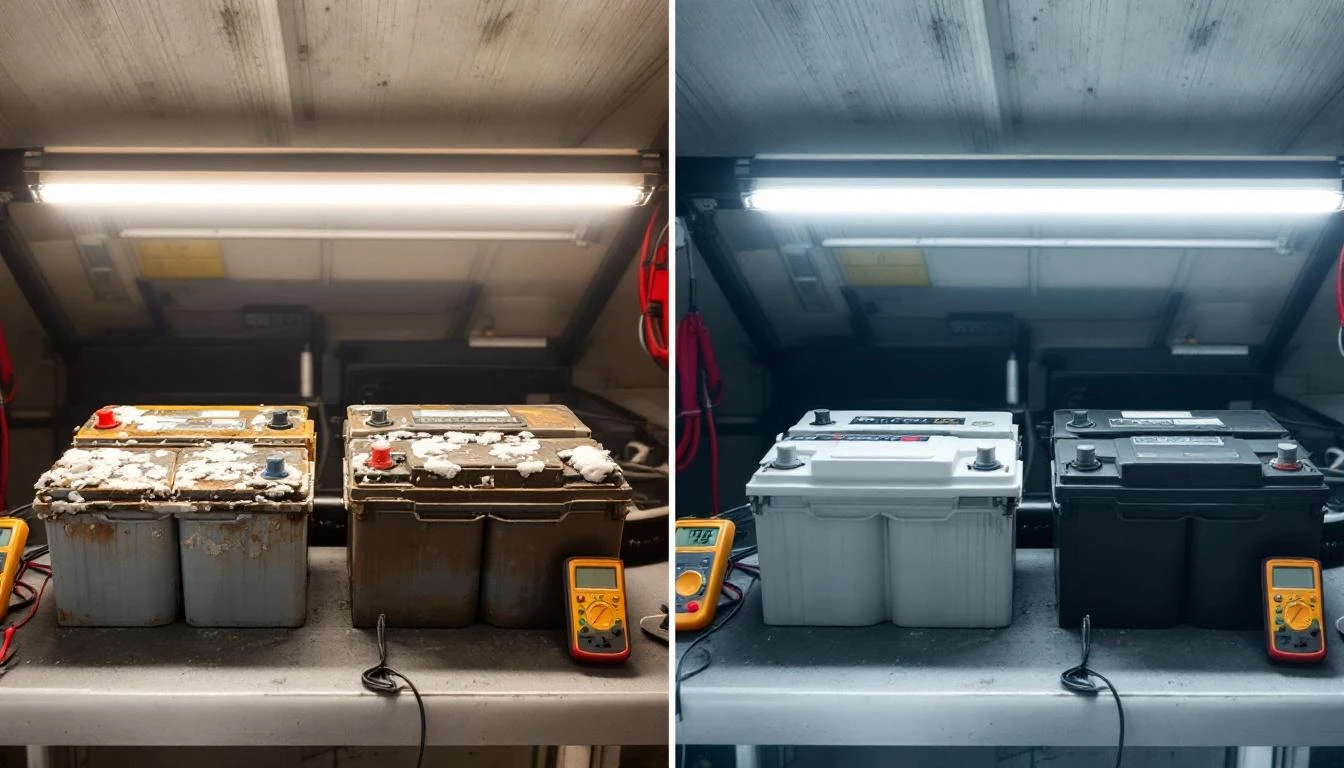
One weak link drags down the entire chain.
Test each battery individually with a multimeter after a full charge and 2-hour rest:
- Good battery: 6.3-6.4V
- Marginal: 6.1-6.2V
- Bad: Below 6.0V
Also perform a load test. A battery may show correct voltage when idle but fail under load. Many auto parts stores will load-test golf cart batteries for free.
How to Fix: Replace the weak battery. But here’s the thing—if batteries are more than 4 years old or if you’re replacing more than one, replace the entire pack. Mixing old and new batteries creates imbalance and the old batteries will quickly damage the new ones.
Product Solution: Our battery packs page offers complete matched sets with installation guides, or individual batteries if your pack is newer and only one has failed.
Difficulty: Moderate (1-2 hours for full pack). Batteries are heavy (45-65 lbs each)—use proper lifting technique or get help.
When to Call a Professional
Some situations are beyond DIY troubleshooting and require professional diagnosis:
- Multiple intermittent problems: Power loss happens randomly with no pattern, and you’ve tested all the basics without finding the cause
- Electrical shorts or burning smells: You see sparks, smell burning plastic, or find melted wires—stop using the cart immediately
- Controller programming issues: IQ system controllers sometimes need dealer-level software to diagnose and reprogram
- Motor problems: If the motor runs but makes grinding noises, doesn’t engage, or runs very hot, internal motor problems require specialized tools
- You’re not comfortable with electrical testing: Working on 36-48V systems can be dangerous if you’re unsure—there’s no shame in calling a pro
A certified Club Car technician has diagnostic equipment, wiring diagrams, and experience that can save you time and money versus replacing parts through trial and error.
Prevention Tips: Keep Your Club Car Running Strong
Battery Maintenance (Every Month):
- Check water levels in flooded batteries—distilled water only, fill to just below the fill ring
- Clean terminals and connections before corrosion builds up
- Test voltage regularly to catch declining batteries early
- Ensure your charger completes full cycles—interrupted charging damages batteries
Connection Inspection (Every 3 Months):
- Tighten all battery cable connections—vibration loosens them over time
- Check cable insulation for cracks, wear, or damage
- Apply dielectric grease to terminals to prevent corrosion
- Inspect the main battery cable ground connection to the frame
Electrical System Checks (Every 6 Months):
- Test the solenoid for clean engagement—click should be crisp and immediate
- Verify F&R switch operates smoothly in all positions
- Check controller for loose connections or signs of overheating
- Inspect the main fuse and reset button—replace if corroded
Smart Charging Practices:
- Charge after every use, even short trips—partial discharge cycles extend battery life
- Don’t interrupt charging—let the cycle complete fully
- If storing for winter, charge monthly to prevent sulfation
- Replace your charger if it’s more than 8-10 years old—old chargers damage batteries
Operating Habits That Reduce Electrical Stress:
- Avoid full-throttle starts—gradual acceleration reduces current spikes
- Don’t exceed weight capacity—overloading strains the entire electrical system
- Use headlights sparingly—they draw significant power from the pack
- Address performance issues immediately before they damage other components
Frequently Asked Questions
Why does my Club Car lose power going uphill?
Hills demand maximum current from your batteries. If your battery pack is weak (below 50V on 48V systems) or you have one bad battery dragging down the pack, voltage drops under load and the controller reduces power to protect the system.
Test each battery individually—you need 6.3V minimum per battery. Also check battery cable connections for resistance, which becomes obvious under heavy load.
Can a bad solenoid cause intermittent power loss?
Absolutely. Solenoids have internal contacts that can develop pitting, burning, or carbon buildup over time. This creates intermittent connection—sometimes the contacts make good contact and the cart works perfectly, other times there’s resistance or complete failure.
If you hear clicking but the cart doesn’t always move, or if power cuts out and comes back randomly, test the solenoid by measuring voltage across the large terminals when activated.
How long should Club Car batteries last before losing power?
Quality flooded lead-acid batteries typically last 4-6 years with proper maintenance. AGM batteries can reach 6-8 years.
But lifespan varies dramatically based on use, maintenance, and charging practices. If your batteries are over 5 years old and you’re experiencing power loss, they’re likely at end-of-life. One sign: batteries that show good voltage when resting but drop significantly under load.
What voltage should my Club Car read when fully charged?
For 48V systems (8 batteries): 52-54V when fully charged and rested. For 36V systems (6 batteries): 40-42V.
Anything below these ranges indicates either incomplete charging or battery degradation. Test 2-3 hours after charging completes for accurate readings—batteries need rest time after charging to stabilize voltage.
Why does my cart work fine cold but dies when warm?
This classic symptom points to weak batteries or a failing controller. Batteries deliver full voltage when cool, but as they warm up during use, internal resistance increases and voltage drops below the level needed for operation.
The controller may also have heat-sensitive components failing when operating temperature rises. Test battery voltage when the problem occurs—if it’s dropped below 48V (or 36V), batteries are the issue.
How do I know if I need a new controller or just batteries?
Test batteries first—they’re the most common cause and easier to diagnose. Fully charge the pack, let it rest 2 hours, then measure voltage (should be 52-54V for 48V carts). Test under load by driving the cart while someone measures voltage at the battery pack.
If voltage stays above 48V but you still have power loss or erratic behavior, suspect the controller. Controllers typically fail with specific symptoms: surging, speed limitations, or complete shutdown. Battery failure shows gradual power loss and reduced range.
Can I replace just one battery in my Club Car?
You can if the other batteries are less than 2 years old and all test good (6.3V+ each after full charge).
But if batteries are older or you have multiple weak ones, replace the entire pack. In series systems, mixing batteries of different ages and capacities creates imbalance—the old batteries drag down new ones and you’ll be replacing batteries again within months. Complete pack replacement is more cost-effective long-term.
What’s the reset button on my Club Car and why does it keep tripping?
The reset button is a thermal circuit breaker that protects your electrical system from overcurrent damage. It trips when the system draws too many amps—usually from weak batteries forcing the motor to work harder, a failing motor with internal problems, or a short circuit somewhere.
If it trips once after climbing a long steep hill with a full load, that’s normal. If it trips repeatedly during normal use, you have an underlying problem: test batteries first, then check for damaged wires, bad motor brushes, or controller issues.