Golf Cart Squeaking Noise: How to Identify & Fix Common Sounds
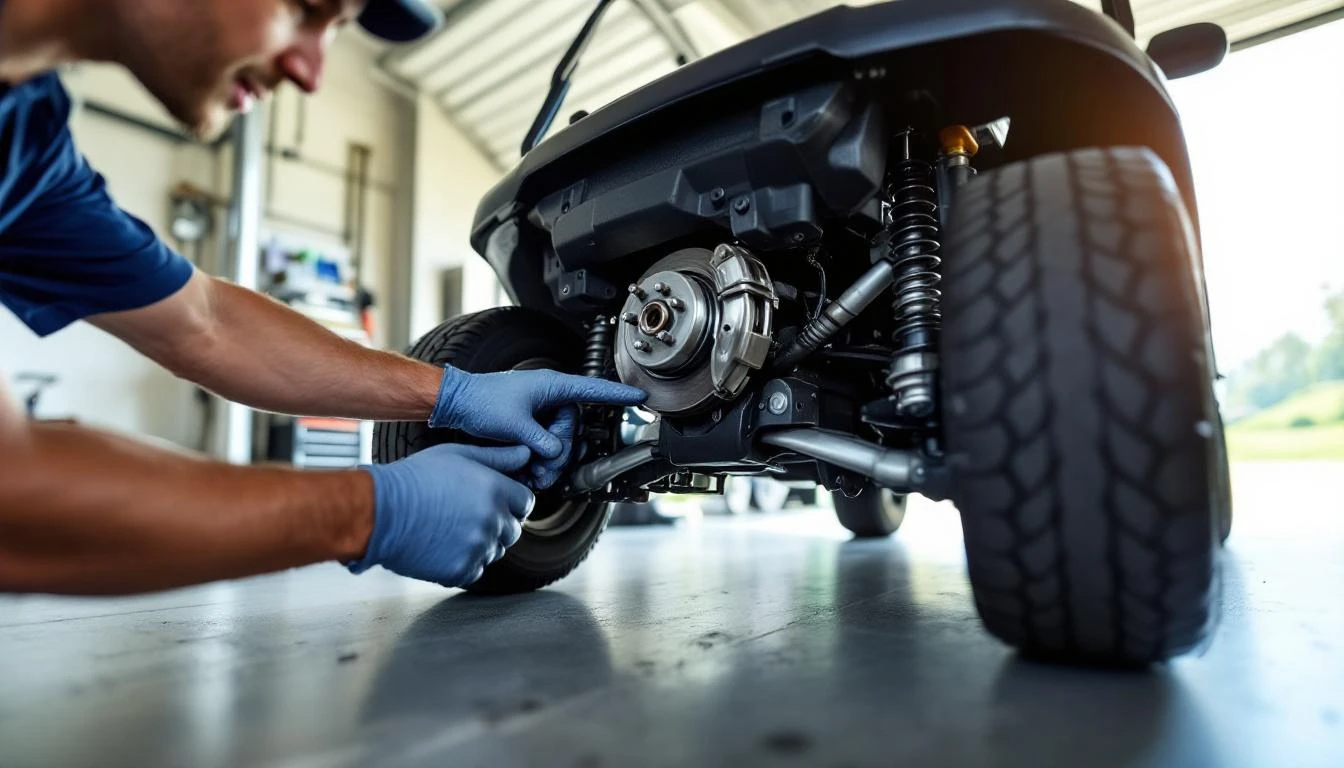
A golf cart squeaking noise typically comes from one of four places: worn brake pads (high-pitched squeal when stopping), dry suspension bushings (rhythmic creaking over bumps), loose drive belts (chirping from the motor area), or failing wheel bearings (constant grinding or squealing while moving). Most squeaks are straightforward fixes that take 30-60 minutes with basic tools and the right replacement parts.
Quick Diagnosis Checklist
Start with the most common culprits first:
- Brake squeal when stopping — Worn brake pads or glazed rotors (60% of cases)
- Rhythmic squeaking over bumps — Dry suspension bushings or leaf spring contact points (25% of cases)
- High-pitched chirp from motor area — Loose or worn drive belt on electric carts (10% of cases)
- Constant squeal while moving — Wheel bearing failure (3% of cases)
- Squeaking when turning — Steering column bushings or tie rod ends (2% of cases)
Is Your Golf Cart Making Noise from the Brakes?
Symptoms: High-pitched squealing or grinding when you apply the brakes, worse in wet conditions or after sitting overnight. The noise stops when you release the brake pedal.
How to Test: Drive your cart at 10-15 mph on level ground and apply the brakes gradually. You’ll hear it clearly from the wheel area if it’s brake-related. Check brake pad thickness by removing the wheel—pads less than 1/8 inch thick need replacement.
The Fix:
- For Club Car: Inspect your Club Car brake system. Most pre-2008 models use mechanical cable brakes, while newer Precedents use self-adjusting brakes. Replace pads if worn below 1/8 inch.
- For EZGO: TXT and RXV models typically need brake pad replacement every 2-3 years with regular use. Clean rotors with brake cleaner to remove glazing.
- For Yamaha: G-series carts often develop brake squeal from dust buildup. Remove wheels, clean rotors thoroughly, and apply anti-squeal compound to pad backing plates.
Product Links: Browse our complete selection of brake pads, rotors, and brake rebuild kits for all makes. While you’re in there, inspect brake cables for fraying.
Difficulty: Beginner-Intermediate | Time: 45-60 minutes per axle
Safety Warning: Always block your cart securely before working under it. Test brakes in a safe area before returning to normal operation.
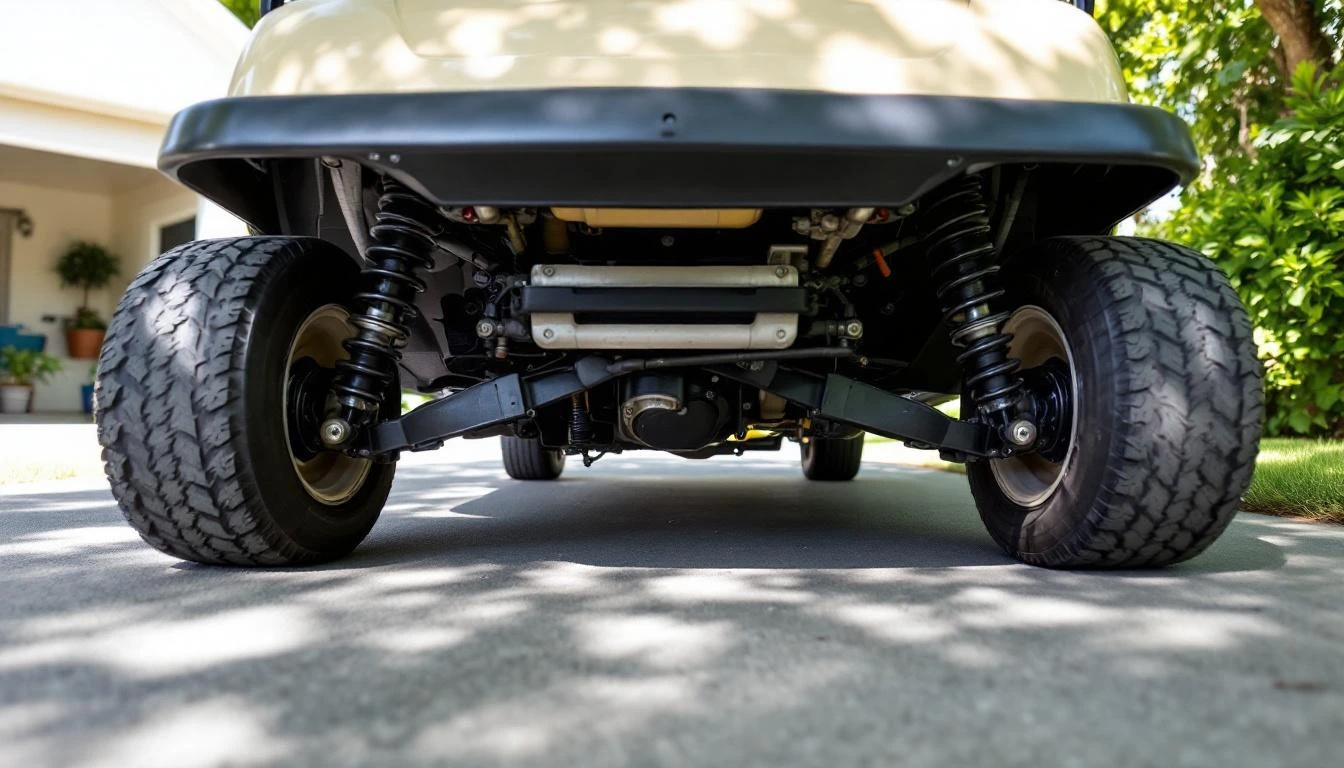
Why Does My Golf Cart Squeak Over Bumps?
Symptoms: Creaking, squeaking, or groaning sounds that occur in rhythm with bumps or dips. The noise often gets worse as the cart warms up or during dry weather.
How to Test: Park on level ground and push down on each corner of the cart, bouncing it up and down. Listen for squeaks from the suspension components. Drive slowly over a speed bump while someone listens from outside to pinpoint the location.
The Fix:
Most suspension squeaks come from dry bushings or metal-to-metal contact points. Here’s the fix by cart type:
- Leaf spring carts (most Club Car DS, older EZGO): Remove leaf springs and clean thoroughly. Apply marine-grade grease between each leaf layer. Check spring eye bushings for wear—replace if cracked or compressed.
- A-arm suspension (Club Car Precedent, EZGO RXV): Inspect all rubber bushings at control arm pivot points. Spray with silicone lubricant or replace worn bushings.
- Yamaha models: G-series carts use a combination system. Grease all zerk fittings on suspension components, then check radius rod bushings.
Check shock absorbers by pushing down hard on each corner—the cart should bounce once and settle. Multiple bounces indicate worn shocks that may also squeak.
Product Links: Shop suspension bushings, leaf spring kits, and shock absorbers. Don’t forget marine-grade grease for long-lasting protection.
Difficulty: Intermediate | Time: 1-2 hours depending on access
What Causes a High-Pitched Motor Noise on Electric Carts?
Symptoms: Chirping, squealing, or whining from the motor compartment that changes with speed. May be intermittent or constant, often worse under acceleration.
How to Test: With the cart safely elevated (rear wheels off the ground), activate the motor in forward. Listen carefully to isolate whether the sound comes from the motor itself, the drive belt, or associated pulleys.
The Fix:
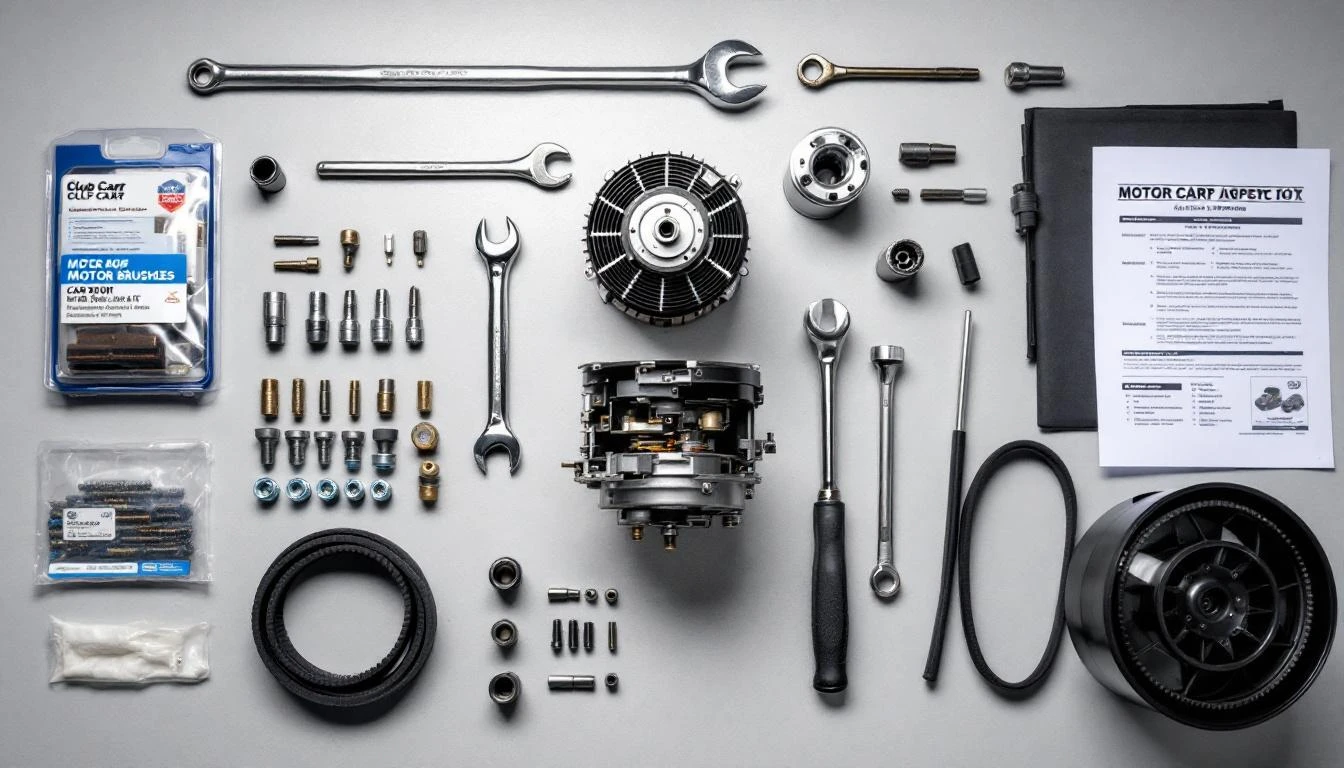
Drive Belt Issues (Most Common):
- Check belt tension—should deflect 1/2 inch with moderate thumb pressure at the longest span
- Inspect for glazing (shiny, hardened surface), cracking, or fraying edges
- Replace belts in pairs if your cart has dual motors
- Verify proper pulley alignment using a straight edge
Motor Bearing Problems:
If the belt looks fine but squealing persists, motor bearings may be failing. Grasp the motor shaft and check for play—any wobble indicates bearing wear. This repair requires motor removal and is best handled by a professional unless you have mechanical experience.
Brand-Specific Notes:
- Club Car IQ/Precedent: AC motors (2004+) rarely squeal; check the controller cooling fan instead
- EZGO RXV: AC drive systems use motor mounting bolts that can loosen—check torque specs
- Older DC systems (all brands): Brush wear can cause squealing—inspect carbon brushes through access ports
Product Links: Find replacement drive belts, motor brushes, and motor rebuild kits in our electric parts section.
Difficulty: Belt replacement: Beginner | Motor work: Advanced | Time: 30 minutes to 3 hours
Safety Warning: Disconnect batteries before any motor work. High voltage systems (48V+) can cause serious injury. Wear insulated gloves.
Could Wheel Bearings Be Causing the Squealing?
Symptoms: Constant squealing, grinding, or humming that increases with speed. The sound doesn’t change when you brake. You may feel vibration through the steering wheel or seat.
How to Test: Safely elevate one wheel at a time. Spin the wheel by hand—it should rotate smoothly and quietly. Roughness, resistance, or grinding indicates bearing failure. Grasp the tire at 12 and 6 o’clock positions and rock it—excessive play means bad bearings.
The Fix:
Wheel bearing replacement varies by cart type:
| Cart Type | Bearing Style | Replacement Notes |
|---|---|---|
| Club Car DS/Precedent | Tapered roller | Requires bearing packer tool, proper torque critical |
| EZGO TXT/RXV | Sealed cartridge (front), tapered (rear) | Front bearings press out, rear needs greasing |
| Yamaha G-series | Tapered roller (most) | Similar to automotive, repack every 2 years |
Always replace bearings in pairs (both sides of the axle) and inspect brake components while you have the wheels off.
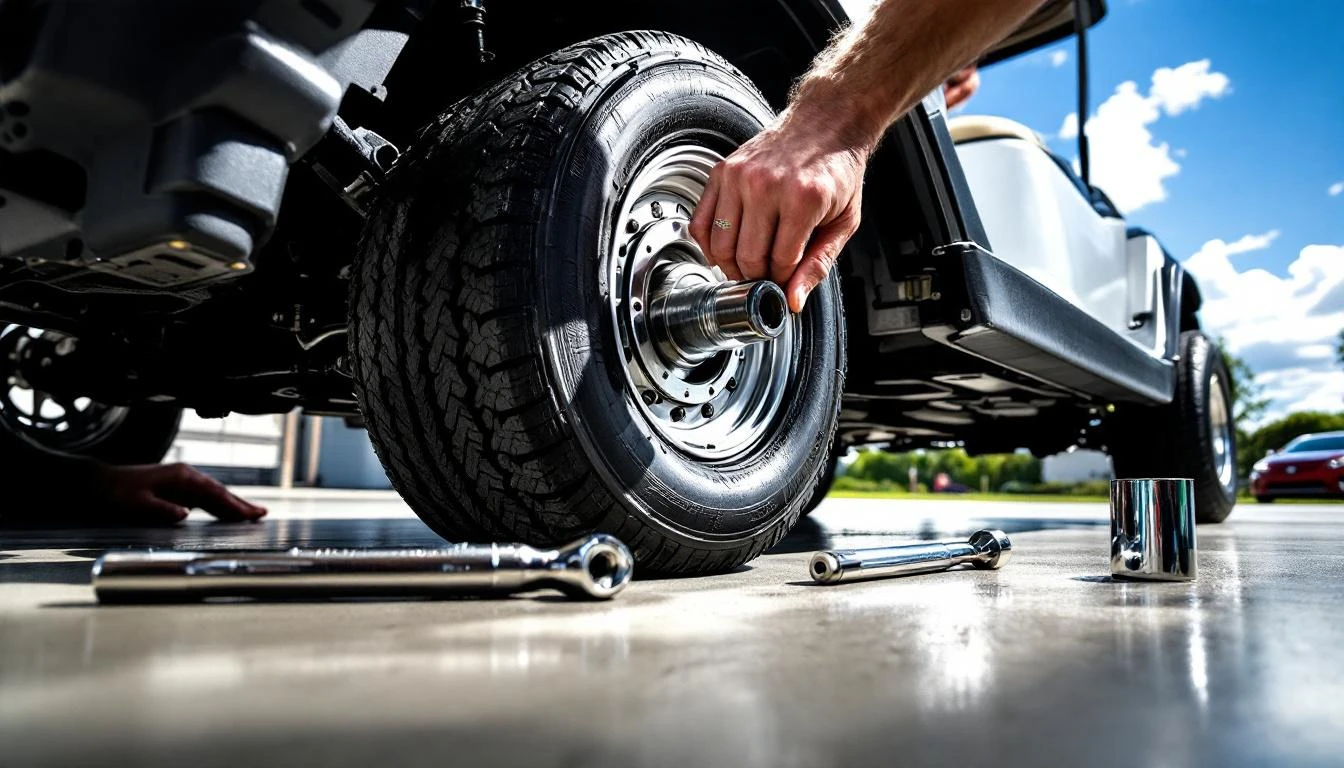
Product Links: Shop wheel bearings, bearing races, and seal kits. Pick up a bearing packer tool and high-temp wheel bearing grease.
Difficulty: Intermediate-Advanced | Time: 2-3 hours per axle
What If the Squeak Happens Only When Turning?
Symptoms: Squeaking or creaking during turns, especially tight turns or when the steering wheel is at full lock. May be accompanied by stiff steering.
How to Test: Turn the steering wheel fully left and right while parked. Listen for noise from the steering column. Drive in a circle at low speed—squeaks that vary with steering angle point to steering components.
The Fix:
Most steering squeaks come from:
- Steering column bushings: Apply silicone spray or white lithium grease to the column where it passes through the frame
- Tie rod ends: Check for dry or worn ball joints at wheel connection points—replace if loose
- Steering box: Low lubricant in manual steering boxes causes squeaking—add 90-weight gear oil through fill plug
- King pin bushings: These wear on older carts—requires specialized tools to replace
Product Links: Browse tie rod ends, steering bushings, and king pin rebuild kits. Stock up on quality lubricants from our accessories section.
Difficulty: Lubrication: Beginner | Component replacement: Intermediate | Time: 20 minutes to 1.5 hours
When to Call a Professional
Most golf cart squeaking issues are DIY-friendly, but some situations require professional help:
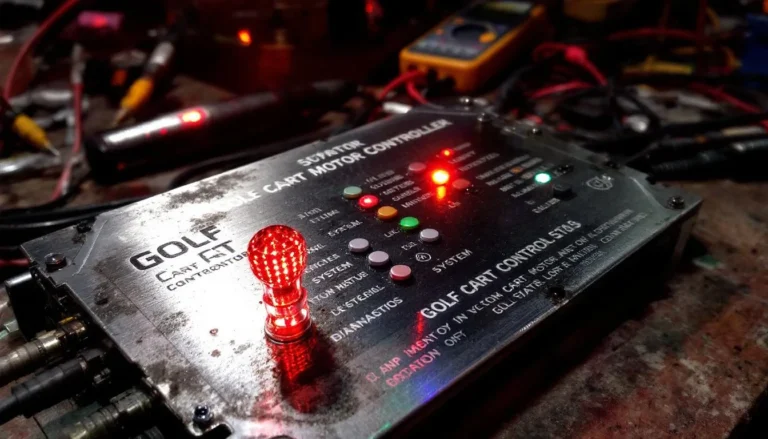
- Electrical squealing with burning smell: May indicate controller or motor failure—stop driving immediately
- Loud grinding that appeared suddenly: Could be catastrophic component failure (differential, transmission)
- Squeaking accompanied by loss of power: Suggests drive train problems beyond simple maintenance
- You lack proper tools: Bearing packers, spring compressors, and torque wrenches are essential for some repairs
- Safety concerns: If you’re uncomfortable working with heavy components, springs under tension, or electrical systems
A qualified golf cart technician has specialized diagnostic equipment and can often identify issues faster than trial-and-error troubleshooting. Shop time typically runs $75-125/hour—factor that in when deciding between DIY and professional repair.
Prevention Tips: Stop Squeaks Before They Start
Regular maintenance prevents most golf cart noises.
Monthly Checks:
- Inspect brake pads for wear—replace when below 1/8 inch thickness
- Listen for new sounds during your regular route
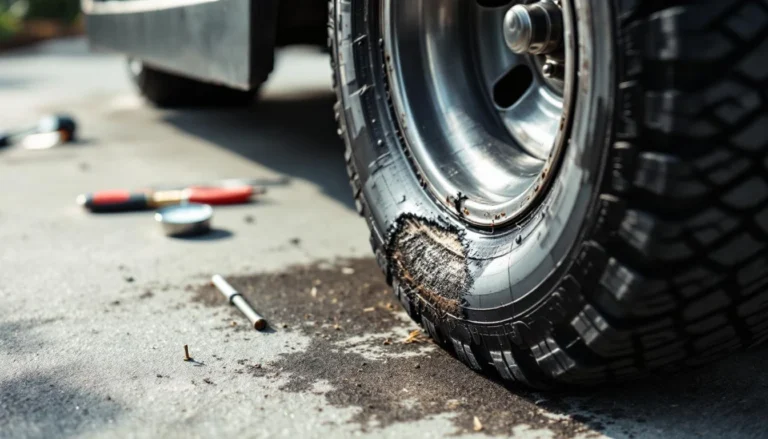
- Check tire pressure (squealing can come from under-inflated tires scrubbing)
Quarterly Maintenance:
- Lubricate all grease fittings (suspension, steering) with marine-grade grease
- Apply silicone spray to rubber bushings and weather seals
- Check drive belt tension on electric carts
- Clean brake components and verify proper adjustment
Annual Service:
- Repack wheel bearings (or verify sealed bearings are intact)
- Disassemble and grease leaf springs completely
- Replace drive belts as preventive maintenance (every 2-3 years)
- Inspect all suspension components for wear
Storage Matters: Carts stored outside develop squeaks faster due to moisture and temperature changes. Use a quality cover or store in a garage when possible. Run your cart at least once per month during storage to keep lubricants distributed.
Keep a maintenance log noting when you hear new sounds—this helps identify patterns and catch problems early when they’re cheaper to fix.
Frequently Asked Questions
Why does my golf cart squeak when I first start driving but then stops?
Morning squeaks that disappear after warmup typically indicate surface rust on brake rotors (moisture overnight) or stiff grease in bushings that loosens with movement. This is normal in humid climates but excessive squeaking suggests your brake pads may be worn or your suspension needs fresh grease. Drive a short distance to warm components, then retest—persistent noise requires inspection.
Can I use WD-40 to stop golf cart squeaking?
No. WD-40 is a penetrating oil and temporary moisture displacer, not a long-term lubricant. It’ll quiet squeaks for a few days but then attract dirt and dry out, making problems worse. Use proper lubricants instead: silicone spray for rubber bushings, marine-grade grease for metal-to-metal contact, and white lithium grease for steering components. These provide lasting protection and won’t damage rubber parts.
How much does it cost to fix a squeaky golf cart?
DIY costs range from $15-20 for lubricants to $150-300 for complete brake or suspension component replacement. Professional shop repairs typically run $100-400 depending on the issue—brake pad replacement averages $150-200, while suspension bushing replacement costs $200-350. Wheel bearing jobs run $250-400 professionally. Buying quality parts from GolfCartPartsOutlet and doing the work yourself typically saves 50-70% versus shop rates.
Is it safe to drive a golf cart that’s squeaking?
Depends on the source. Suspension squeaks from dry bushings are annoying but not immediately dangerous. But brake squealing (especially if accompanied by reduced stopping power), grinding noises, or high-pitched motor squeals require immediate attention. If you notice any change in handling, stopping distance, or power delivery along with the squeak, stop driving and diagnose the problem. Don’t ignore warning sounds—what starts as a squeak can escalate to expensive damage.
Why does my electric golf cart make a high-pitched whine when accelerating?
Electric motor whine during acceleration is normal to some degree—AC motors especially produce high-frequency sounds under load. Excessive whining suggests loose drive belts (check tension), worn motor brushes in DC systems (inspect and replace), or controller issues (verify connections are tight). The sound should be relatively consistent; if it’s getting louder over time or accompanied by jerky acceleration, have the motor and controller system inspected professionally.
What’s the difference between a squeak and a squeal on a golf cart?
A squeak is typically rhythmic, lower-pitched, and relates to movement—suspension bushings, steering components, or body contact points. Squeaks often correlate with bumps or turning. A squeal is higher-pitched, more constant, and usually friction-related—brake pads, drive belts, or bearings. Squeals often change with speed or load. Identifying which type you’re hearing helps narrow down the source quickly during troubleshooting.
Can weather cause golf cart squeaking?
Yes. Cold weather stiffens grease and rubber bushings, causing temporary squeaks until components warm up. High humidity creates surface rust on brake rotors overnight, producing morning squeals that disappear after a few brake applications. Dry climates cause rubber bushings to dry out faster, increasing squeak likelihood. Temperature swings expand and contract metal components, sometimes causing temporary contact noises. Regular lubrication and proper storage minimize weather-related squeaks.
How often should I lubricate my golf cart to prevent squeaking?
For regular use (3-4 times weekly), lubricate suspension grease fittings and steering components every 3 months. Apply silicone spray to bushings monthly. For daily use or commercial applications, increase to monthly greasing and bi-weekly bushing treatment. Occasional-use carts need quarterly attention minimum. Always lubricate before long storage periods and after washing your cart. If you hear squeaks developing between service intervals, you’re waiting too long—increase frequency until squeaks stay away.